
I'm wondering what some of your thoughts are on this: puckering the lips to help blood flow and ease fatigue on a long gig. Not puckering while playing; puckering during breaks.
I caught myself doing this earlier this week at the end of a long gig (where the bandleader wanted to play a dramatic exit tune with lots of loud potato notes) and it seemed to help.
Pucker for fatigue recovery?
-
AndrewMeronek
- Posts: 1567
- Joined: Fri Mar 30, 2018 6:09 pm
Pucker for fatigue recovery?
“All musicians are subconsciously mathematicians.”
- Thelonious Monk
- Thelonious Monk
-
harrisonreed
- Posts: 6329
- Joined: Fri Aug 17, 2018 12:18 pm

Re: Pucker for fatigue recovery?
I do that all the time. Not like a "kiss" pucker, but more of a kind of duck face thing, trying to get the corners forward and out of their normal position
- Harrison Reed
Harry's Custom Mouthpieces
Harry's Custom Mouthpieces
-
ghmerrill
- Posts: 1836
- Joined: Mon Apr 02, 2018 4:41 pm
Re: Pucker for fatigue recovery?
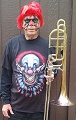
Illustrated in your profile picture?
Gary Merrill
Getzen 1052FD
DE LB K/K9/110 Lexan
---------------------------
Amati Oval Euph
1924 Buescher 3-valve Eb tuba
1947 Olds "Standard" trombone (Bach 12c)
Getzen 1052FD
DE LB K/K9/110 Lexan
---------------------------
Amati Oval Euph
1924 Buescher 3-valve Eb tuba
1947 Olds "Standard" trombone (Bach 12c)
-
RossM
- Posts: 43
- Joined: Thu Jan 27, 2022 6:55 am
Re: Pucker for fatigue recovery?
It feels like it helps me too, and I've definitely seen some big name players do it before. Hard to not make it look weird if you're at the front of the stage though!
-
harrisonreed
- Posts: 6329
- Joined: Fri Aug 17, 2018 12:18 pm
Re: Pucker for fatigue recovery?
So that guy in my profile pic is actually a really famous main character from the Anime "One Piece", named Usopp. He is supposed to be a coward but he's consistently one of the bravest characters in the series, he just has to overcome his fears.
I have a CD of music from the show and they gave him the trombone on the back cover.
- Harrison Reed
Harry's Custom Mouthpieces
Harry's Custom Mouthpieces
-
ghmerrill
- Posts: 1836
- Joined: Mon Apr 02, 2018 4:41 pm
Re: Pucker for fatigue recovery?
That's one I missed. Probably a generational thing.

Gary Merrill
Getzen 1052FD
DE LB K/K9/110 Lexan
---------------------------
Amati Oval Euph
1924 Buescher 3-valve Eb tuba
1947 Olds "Standard" trombone (Bach 12c)
Getzen 1052FD
DE LB K/K9/110 Lexan
---------------------------
Amati Oval Euph
1924 Buescher 3-valve Eb tuba
1947 Olds "Standard" trombone (Bach 12c)
-
harrisonreed
- Posts: 6329
- Joined: Fri Aug 17, 2018 12:18 pm
Re: Pucker for fatigue recovery?
I don't think he actually plays trombone. He's just posing for the CD jacket. 
He's been around since 1997, I think. One Piece is still going, I think it's supposed to be one of the most valuable intellectual properties of all time.

He's been around since 1997, I think. One Piece is still going, I think it's supposed to be one of the most valuable intellectual properties of all time.
- Harrison Reed
Harry's Custom Mouthpieces
Harry's Custom Mouthpieces
-
AndrewMeronek
- Posts: 1567
- Joined: Fri Mar 30, 2018 6:09 pm
Re: Pucker for fatigue recovery?
As a trombonist, I'm long past worrying about looking like a normal human being.RossM wrote: Sat Mar 21, 2026 11:24 am It feels like it helps me too, and I've definitely seen some big name players do it before. Hard to not make it look weird if you're at the front of the stage though!
“All musicians are subconsciously mathematicians.”
- Thelonious Monk
- Thelonious Monk
-
Wayne
- Posts: 76
- Joined: Sat Mar 22, 2025 8:09 am
Re: Pucker for fatigue recovery?
Or try horsey face and macaque monkey yawns face. Anything that gets blood flowing helps recovery of tissues.
-
Cmillar
- Posts: 416
- Joined: Tue Apr 24, 2018 5:39 am
Re: Pucker for fatigue recovery?
From page 24 of Denis Wick's 'Trombone Technique':
"I have even heard it said that a really passionate kiss can spoil a trombonist's embouchure for several hours!"
"I have even heard it said that a really passionate kiss can spoil a trombonist's embouchure for several hours!"