
I'm sure there are multiple threads about this already all over the internet, but i'm looking to have an up-to-date discussion on the pros & cons of rim buzzing/mouthpiece buzzing.
Personally, rim and mouthpiece buzzing has been a HUGE part of my improvement as a player. I will say my sound improved, my efficiency, endurance, range, dynamics etc...
I know the opposing side says "It's not the same as when you buzz into the instrument, so why would I or anyone else practice this?"
I suppose I understand the point of those players above, but don't you think the ability to have a tremendous amount of control and the ability to create a great sound just on the rim/mouthpiece would aid in your ability to play the trombone better? I'm not talking about a direct correlation, i'm talking about an indirect relationship of having the control on the mouthpiece means you ALSO have control (to some extent) on the horn!
Now, i'm interested to hear why we should NOT buzz, and the convincing reasons we shouldn't because personally, I don't see reasons not to. I'm also very interested to learn more about the potential benefits, perhaps benefits I don't already know about. I look forward to reading and contributing in this discussion.
Rim & Mouthpiece Buzzing (2026)
-
BrianJohnston
- Posts: 1057
- Joined: Sat Jul 11, 2020 7:49 pm
Rim & Mouthpiece Buzzing (2026)
Faculty - Mount Royal University
Civic Orchestra of Chicago Alum 2019-2021
Bach Brass Artist
Civic Orchestra of Chicago Alum 2019-2021
Bach Brass Artist
-
harrisonreed
- Posts: 6329
- Joined: Fri Aug 17, 2018 12:18 pm

Re: Rim & Mouthpiece Buzzing (2026)
I'll go with my hot take... 
Buzzing is a teaching tool that is beneficial to help students open up their air. However I believe that these benefits drop off fast and become the opposite of benefits if you start *practicing* on the mouthpiece.
The issue with mouthpiece buzzing is that it is a forced vibration of the lips, as opposed to playing the trombone, which is a sympathetic vibration of the lips that is locked in to one of the harmonics of the trombone. The mouthpiece also has harmonics, but they are far, far higher than the frequencies that you can buzz on the mouthpiece. Because of this, any sound you make on the mouthpiece is caused by you forcing the buzz with extra tension in the embouchure.
So, practicing on the mouthpiece is practicing an unnecessary and unnatural embouchure tension which is not necessary on the full trombone, and maintaining this tension actually causes a poor tone on the trombone. If you try the experiment where you play on the mouthpiece, and then slide it into the leadpipe while buzzing, you will hear just how bad this sound you're practicing on the mouthpiece really is.
I counterargument to this that I've heard it's "oh, well you shouldn't be buzzing with a real sound, it should have a lot of air and fluff in it". Okay... This is probably closer to what your lips are doing while playing the trombone ... But what are you getting out of this? What benefit are you getting, that you can't get by just playing the whole trombone? If you do the opposite of the experiment above, playing an F, and then slowly removing the mouthpiece from the leadpipe, you'll find that the "buzz" just becomes air without any vibration coming out of the shank. That is what you're actually doing to get a pure sound. So adding in an airy or wet buzz to that on just the mouthpiece still gets you further from that pure sound.
To me, I think the practice of buzzing the mouthpiece, at best, might loosen your lips up and act as a mind game that gets you concentrated on the task at hand. It is useful for teachers to use as a demonstration technique for putting air through the horn. Certainly could be positive if this is part of your mental prep to perform.
At worst it will introduce tension into the embouchure and predispose the player to try to force the sound with the buzzing lips, rather than achieving the buzz (as locked into a harmonic) with the whole system of air inside the trombone.
Buzzing is a teaching tool that is beneficial to help students open up their air. However I believe that these benefits drop off fast and become the opposite of benefits if you start *practicing* on the mouthpiece.
The issue with mouthpiece buzzing is that it is a forced vibration of the lips, as opposed to playing the trombone, which is a sympathetic vibration of the lips that is locked in to one of the harmonics of the trombone. The mouthpiece also has harmonics, but they are far, far higher than the frequencies that you can buzz on the mouthpiece. Because of this, any sound you make on the mouthpiece is caused by you forcing the buzz with extra tension in the embouchure.
So, practicing on the mouthpiece is practicing an unnecessary and unnatural embouchure tension which is not necessary on the full trombone, and maintaining this tension actually causes a poor tone on the trombone. If you try the experiment where you play on the mouthpiece, and then slide it into the leadpipe while buzzing, you will hear just how bad this sound you're practicing on the mouthpiece really is.
I counterargument to this that I've heard it's "oh, well you shouldn't be buzzing with a real sound, it should have a lot of air and fluff in it". Okay... This is probably closer to what your lips are doing while playing the trombone ... But what are you getting out of this? What benefit are you getting, that you can't get by just playing the whole trombone? If you do the opposite of the experiment above, playing an F, and then slowly removing the mouthpiece from the leadpipe, you'll find that the "buzz" just becomes air without any vibration coming out of the shank. That is what you're actually doing to get a pure sound. So adding in an airy or wet buzz to that on just the mouthpiece still gets you further from that pure sound.
To me, I think the practice of buzzing the mouthpiece, at best, might loosen your lips up and act as a mind game that gets you concentrated on the task at hand. It is useful for teachers to use as a demonstration technique for putting air through the horn. Certainly could be positive if this is part of your mental prep to perform.
At worst it will introduce tension into the embouchure and predispose the player to try to force the sound with the buzzing lips, rather than achieving the buzz (as locked into a harmonic) with the whole system of air inside the trombone.
- Harrison Reed
Harry's Custom Mouthpieces
Harry's Custom Mouthpieces
-
sirisobhakya
- Posts: 440
- Joined: Mon Jun 11, 2018 8:04 pm
Re: Rim & Mouthpiece Buzzing (2026)
I second Harrison, especially in case of extended mouthpiece buzzing like buzz notes to match drone, and extensive lip slur on mouthpiece.
For me, I cannot produce good and clear sound with only mouthpiece using my normal embouchure, to the point that I have separated “mouthpiece embouchure”, which is tighter, to teach band newcomers. If I use the mouthpiece embouchure to play the horn, the sound is more compact and less resonant. I don’t like that sound. So I don’t use that embouchure and don’t buzz mouthpiece.
I agree that it is beneficial for someone with weak lips muscle or someone who does not know how to form an embouchure at all, but advanced embouchure problem like moving corners are not rectified by mouthpiece buzzing. Some problem like inability to find the center of notes can even be exacerbated, since one doesn’t let his/her lips to “feel” the reflected waves and therefore cannot feel the “center” of the notes.
Mouthpiece buzzing can also be beneficial if one cannot play an entire horn for reasons like noise complaint. But if you can play an entire horn, you should play the entire horn.
For me, I cannot produce good and clear sound with only mouthpiece using my normal embouchure, to the point that I have separated “mouthpiece embouchure”, which is tighter, to teach band newcomers. If I use the mouthpiece embouchure to play the horn, the sound is more compact and less resonant. I don’t like that sound. So I don’t use that embouchure and don’t buzz mouthpiece.
I agree that it is beneficial for someone with weak lips muscle or someone who does not know how to form an embouchure at all, but advanced embouchure problem like moving corners are not rectified by mouthpiece buzzing. Some problem like inability to find the center of notes can even be exacerbated, since one doesn’t let his/her lips to “feel” the reflected waves and therefore cannot feel the “center” of the notes.
Mouthpiece buzzing can also be beneficial if one cannot play an entire horn for reasons like noise complaint. But if you can play an entire horn, you should play the entire horn.
Last edited by sirisobhakya on Thu Feb 19, 2026 4:46 pm, edited 1 time in total.
Chaichan Wiriyaswat
Bangkok, Thailand
Bangkok, Thailand
-
BrianJohnston
- Posts: 1057
- Joined: Sat Jul 11, 2020 7:49 pm
Re: Rim & Mouthpiece Buzzing (2026)
I especially like Harrison’s point of adding additional unnecessary tension to the horn by means of mouthpiece, but what are your thoughts on; because you are able to have full control on just the rim/mouthpiece, you’ll have MORE control on just the horn as long as you see them as separate tasks. Does that make sense? They who can bicep curl 75lbs dumbbells have an advantage at the bench press analogy.
My next thought is, can’t it also be beneficial to the aperture to free buzz/rim buzz to hear efficiency & stability in whatever note you’re aiming for? A note you’re unable to buzz is a note you’re likely not able to consistently play.
My final point (for now) is the ability for high levels to grow additions embouchure muscles by means of buzzing that you wouldn’t form with just the trombone. This is a touchier point as I see the potential harm in getting too many unrelated muscles involved, but at the same time growing the important muscles for endurance, stability, accuracy.
Again the two posts above this one throw out great points, but I’m looking to challenge them until there is a decently clear reasoning for or against my OP. Friendly arguments encouraged;
My next thought is, can’t it also be beneficial to the aperture to free buzz/rim buzz to hear efficiency & stability in whatever note you’re aiming for? A note you’re unable to buzz is a note you’re likely not able to consistently play.
My final point (for now) is the ability for high levels to grow additions embouchure muscles by means of buzzing that you wouldn’t form with just the trombone. This is a touchier point as I see the potential harm in getting too many unrelated muscles involved, but at the same time growing the important muscles for endurance, stability, accuracy.
Again the two posts above this one throw out great points, but I’m looking to challenge them until there is a decently clear reasoning for or against my OP. Friendly arguments encouraged;
Faculty - Mount Royal University
Civic Orchestra of Chicago Alum 2019-2021
Bach Brass Artist
Civic Orchestra of Chicago Alum 2019-2021
Bach Brass Artist
-
Wayne
- Posts: 76
- Joined: Sat Mar 22, 2025 8:09 am
Re: Rim & Mouthpiece Buzzing (2026)
Biceps do almost nothing for bench press (it's a chest development exercise and secondarily triceps) but that is not the point being made. There is no such thing as extra strength or too much strength. Physical attributes need be used correctly, but a person can't really be too fast, too agile or too strong.
More on the topic, I have come to prefer free buzzing as part of my routine. I have a good free buzz (some just can't do it I've seen written here) and use it as a way to get the lips and musculature warm, wet and sufficiently swollen. I don't like the feeling of my first note on the horn with a cold embouchure. With 20 seconds of free buzzing ( I can go from about low Bb to double high Bb and just do glissandi up and down from different starting points) my first horn notes are warmed up and sound as good as they will for the day.
I've used a lot of mouthpiece buzzing strategically in the past, but I can see how if it was just a habitual thing to play everything on the mouthpiece it may end up wasting some time. Strategic uses included learning to keep air flowing, practicing a musical effect before I could get my slide around a passage and fixing some range sticking points.
It works for many. If it works for you go ahead and get buzzed.
More on the topic, I have come to prefer free buzzing as part of my routine. I have a good free buzz (some just can't do it I've seen written here) and use it as a way to get the lips and musculature warm, wet and sufficiently swollen. I don't like the feeling of my first note on the horn with a cold embouchure. With 20 seconds of free buzzing ( I can go from about low Bb to double high Bb and just do glissandi up and down from different starting points) my first horn notes are warmed up and sound as good as they will for the day.
I've used a lot of mouthpiece buzzing strategically in the past, but I can see how if it was just a habitual thing to play everything on the mouthpiece it may end up wasting some time. Strategic uses included learning to keep air flowing, practicing a musical effect before I could get my slide around a passage and fixing some range sticking points.
It works for many. If it works for you go ahead and get buzzed.
-
BrianJohnston
- Posts: 1057
- Joined: Sat Jul 11, 2020 7:49 pm
Re: Rim & Mouthpiece Buzzing (2026)
I don’t want to tangent too far on the weight lifting, but you said bicep curls do “almost nothing”. That means they do a little bit, maybe 10% of the motions required. That could be a weight increase of maybe 15lbs on top of whatever your current max is. Maybe no added weight at all, but you’ll have slightly better form and slightly more control? More stability even? This is sort of my argument FOR buzzing. Not directly related to trombone playing but potentially more beneficial than no buzzing at all.
Faculty - Mount Royal University
Civic Orchestra of Chicago Alum 2019-2021
Bach Brass Artist
Civic Orchestra of Chicago Alum 2019-2021
Bach Brass Artist
-
NathanSobieralski
- Posts: 272
- Joined: Sun Feb 04, 2024 8:47 pm
Re: Rim & Mouthpiece Buzzing (2026)
I do some buzzing to (essentially) focus my aperture. That's how its useful to me personally for trumpet.
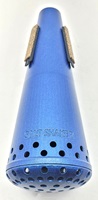
Shameless plug: If you like buzzing you may find this tool useful to variably add some resistance past the mouthpiece. Its not the only tool that can do this, but its repeatable and efficient (and cleanable!)
https://s-mute.com/products/variable-re ... zzing-tool

Shameless plug: If you like buzzing you may find this tool useful to variably add some resistance past the mouthpiece. Its not the only tool that can do this, but its repeatable and efficient (and cleanable!)
https://s-mute.com/products/variable-re ... zzing-tool
Salt Shaker Mute
https://s-mute.com/collections/trombone-mutes
Trombone Pixie Mute
https://s-mute.com/products/trombone-pixie-mute
Cork Adapters
https://s-mute.com/products/adapter-set ... bone-mutes
https://s-mute.com/collections/trombone-mutes
Trombone Pixie Mute
https://s-mute.com/products/trombone-pixie-mute
Cork Adapters
https://s-mute.com/products/adapter-set ... bone-mutes
-
Wayne
- Posts: 76
- Joined: Sat Mar 22, 2025 8:09 am
Re: Rim & Mouthpiece Buzzing (2026)
I was essentially agreeing with your point. My bad for not making that more clear.BrianJohnston wrote: Thu Feb 19, 2026 1:22 pm I don’t want to tangent too far on the weight lifting, but you said bicep curls do “almost nothing”. That means they do a little bit, maybe 10% of the motions required. That could be a weight increase of maybe 15lbs on top of whatever your current max is. Maybe no added weight at all, but you’ll have slightly better form and slightly more control? More stability even? This is sort of my argument FOR buzzing. Not directly related to trombone playing but potentially more beneficial than no buzzing at all.
-
Gfunk
- Posts: 142
- Joined: Mon Jan 10, 2022 9:56 pm
Re: Rim & Mouthpiece Buzzing (2026)
I don’t think many advocates for buzzing will say that it is like playing the horn. Most, in my experience, recognize it as a distinct and separate tool to improve your playing in some areas. I find having clear control of the pitch on the mouthpiece makes playing trombone easier. Many people who have problems with pitch and finding the center of resonance also have problems buzzing. It’s probably a bit of chicken and the egg situation as to why, but buzzing with a drone and piano can drastically help that IMO.
Of course it is very possible to buzz in ways that are counterproductive to good trombone playing. Playing “big” I believe is as common one among more developed players as is playing with an unsupported buzz in younger players. Moving relentless air while maintaining a centered and focused buzz is always my goal.
Also to be a bit more on the specific topic here, rim buzzing in the upper register has been very helpful for me in not playing too wide. I’ll also add that having fine control of the buzz through the mouthpiece, rim, or free buzzing is helpful not because of the physical training necessarily, but because of the infinitely variable nature of buzzing without the instrument. The instrument locks what we do into place and can course correct like bumpers in a bowling lane. Buzzing does not provide any such aids and forces you to stay in the lane, assuming you have a form of pitch accountability like a piano or drone. This finer control is usually my goal is with buzzing.
Brian Wendel posted a good video to Facebook talking about this recently. I’ll try to find it to share here.
Of course it is very possible to buzz in ways that are counterproductive to good trombone playing. Playing “big” I believe is as common one among more developed players as is playing with an unsupported buzz in younger players. Moving relentless air while maintaining a centered and focused buzz is always my goal.
Also to be a bit more on the specific topic here, rim buzzing in the upper register has been very helpful for me in not playing too wide. I’ll also add that having fine control of the buzz through the mouthpiece, rim, or free buzzing is helpful not because of the physical training necessarily, but because of the infinitely variable nature of buzzing without the instrument. The instrument locks what we do into place and can course correct like bumpers in a bowling lane. Buzzing does not provide any such aids and forces you to stay in the lane, assuming you have a form of pitch accountability like a piano or drone. This finer control is usually my goal is with buzzing.
Brian Wendel posted a good video to Facebook talking about this recently. I’ll try to find it to share here.
Last edited by Gfunk on Thu Feb 19, 2026 6:39 pm, edited 1 time in total.
-
BrianJohnston
- Posts: 1057
- Joined: Sat Jul 11, 2020 7:49 pm
Re: Rim & Mouthpiece Buzzing (2026)
Wayne, we are definitely on the same side. Apologies that I was not clear on that front. I was still going after your point to a small amount to enhance my point, but alas - we are in agreement.Wayne wrote: Thu Feb 19, 2026 5:29 pmI was essentially agreeing with your point. My bad for not making that more clear.BrianJohnston wrote: Thu Feb 19, 2026 1:22 pm I don’t want to tangent too far on the weight lifting, but you said bicep curls do “almost nothing”. That means they do a little bit, maybe 10% of the motions required. That could be a weight increase of maybe 15lbs on top of whatever your current max is. Maybe no added weight at all, but you’ll have slightly better form and slightly more control? More stability even? This is sort of my argument FOR buzzing. Not directly related to trombone playing but potentially more beneficial than no buzzing at all.
Faculty - Mount Royal University
Civic Orchestra of Chicago Alum 2019-2021
Bach Brass Artist
Civic Orchestra of Chicago Alum 2019-2021
Bach Brass Artist
-
Bonearzt
- Posts: 834
- Joined: Thu Mar 22, 2018 7:40 am
Re: Rim & Mouthpiece Buzzing (2026)
My totally semi-professional, non-teaching perspective....
I am a proponent of mouthpiece buzzing, but NOT as a substitute for time on the actual horn.
I mouthpiece buzz as a warm-up when I don't have access to the horn, usually en route to a rehearsal or gig.
I don't add any resistance to the end of the shank, and I've tried a cut-away and just a rim and free buzzing, but they don't work for me.
The short, 2 or 3 minute buzzing "sessions" as I'm driving get my lips limber so I can get right into my rehearsal or gig without the need for an extended warm up on the horn.
As with EVERYTHING we discuss here on the Chat, you take and use what works and set the rest aside.
Eric
I am a proponent of mouthpiece buzzing, but NOT as a substitute for time on the actual horn.
I mouthpiece buzz as a warm-up when I don't have access to the horn, usually en route to a rehearsal or gig.
I don't add any resistance to the end of the shank, and I've tried a cut-away and just a rim and free buzzing, but they don't work for me.
The short, 2 or 3 minute buzzing "sessions" as I'm driving get my lips limber so I can get right into my rehearsal or gig without the need for an extended warm up on the horn.
As with EVERYTHING we discuss here on the Chat, you take and use what works and set the rest aside.
Eric
Eric Edwards
Professional Instrument Repair
972.795.5784
"If you must choose between two evils, choose the one you haven't tried yet."
"Rather fail with honor than succeed by fraud." -Sophocles
Professional Instrument Repair
972.795.5784
"If you must choose between two evils, choose the one you haven't tried yet."
"Rather fail with honor than succeed by fraud." -Sophocles
-
BrianJohnston
- Posts: 1057
- Joined: Sat Jul 11, 2020 7:49 pm
Re: Rim & Mouthpiece Buzzing (2026)
Thanks for your contribution. I guess I didn't mention the fact that I am incorporating all of the buzzing i'm talking about as part of a practice session with the trombone, nothing something completely seperated.
Faculty - Mount Royal University
Civic Orchestra of Chicago Alum 2019-2021
Bach Brass Artist
Civic Orchestra of Chicago Alum 2019-2021
Bach Brass Artist
-
sirisobhakya
- Posts: 440
- Joined: Mon Jun 11, 2018 8:04 pm
Re: Rim & Mouthpiece Buzzing (2026)
I have to contradict you on this one, at least for me. As mentioned above, my mouthpiece buzzing is feeble, especially lower notes (below D in the staff), and lower than approximately low Bb they don't come out at all. Free buzzing is out of question. However, on a horn I can play them reliably, both soft and loud, with clean (enough) articulation.BrianJohnston wrote: Thu Feb 19, 2026 12:11 pm My next thought is, can’t it also be beneficial to the aperture to free buzz/rim buzz to hear efficiency & stability in whatever note you’re aiming for? A note you’re unable to buzz is a note you’re likely not able to consistently play.
In my opinion, to better find the center of a given pitch depends more on the sensitivity of the lips to feel the reflected wave, and let the lips lock on that wave, than on the ability to control the lips to buzz at will. The latter seems like "brute-forcing" the note into submission.
Granted, it is better to have an ability to control but not using it than to not have the ability at all. I can see the benefit of it in playing valved brass instrument without trigger, since you have to lip the notes anyway, but on trombone, I think it is much better to lock on to the horn and correct with the slide.
However, I am not against warming up a bit on mouthpiece, just that I don't normally do it myself.
In the end I agree with Eric above: try everything, use what works for you. But then again, some teacher like to force their habit on students, sometimes with devastating result.
Chaichan Wiriyaswat
Bangkok, Thailand
Bangkok, Thailand
-
harrisonreed
- Posts: 6329
- Joined: Fri Aug 17, 2018 12:18 pm
Re: Rim & Mouthpiece Buzzing (2026)
Well, continuing along my hot take, keeping it as objective as I can: I have never understood the weight lifting comparison. Lifting weights is something you do with explosive force in short reps. It's not at all like what your face does to control your embouchure and hold it in place. That is something more akin to yoga. You hold it with the best form, as relaxed as you can, while breathing. Endurance and fine motor control.BrianJohnston wrote: Thu Feb 19, 2026 12:11 pm I especially like Harrison’s point of adding additional unnecessary tension to the horn by means of mouthpiece, but what are your thoughts on; because you are able to have full control on just the rim/mouthpiece, you’ll have MORE control on just the horn as long as you see them as separate tasks. Does that make sense? They who can bicep curl 75lbs dumbbells have an advantage at the bench press analogy.
The muscles in your face are also tiny -- there is a low ceiling on the amount of strength they can gain to begin with. Very little "strength" can be gained. This is unlike a bicep, which is a long muscle that can be built up with a ton of mass along its whole length (and therefore improve seemingly unrelated exercises as a stabilizer muscle).
As far as control on the mouthpiece equating to control on the horn, at some point you need to draw a line in the sand. You need to first decide on whether the buzzing lips are what make the trombone sound and create the pitch, or not. Is the skill of playing the trombone the ability to muscle the pitch out using your chops? I don't think it is.
On the horn, we are trained to lock our embouchure into "the slot". What this really means is getting our lips vibrating sympathetically/symbiotically with how physics dictates the air in the horn should vibrate most efficiently. The air in the horn wants to vibrate at a wavelength determined by the length of the system (pitch) and the total energy in the system (partial/harmonic). Good players come in nearly exactly in sync with this most efficient settling point in the slot, and then adjust the slide to bring it to pitch while staying locked in the slot. Contrast this to "control on the mouthpiece" which would be lipping the pitch with your face. We can't forget that the harmonics you can slot into on the mouthpiece are much higher than anything you can actually buzz on your own.
It isn't that the buzz happens and then the air in the trombone vibrates. They vibrate together simultaneously. The "chicken or egg" argument has come here a few times in other threads on this subject, coming down to basically, "well if your lips aren't buzzing, then how can the air in the trombone vibrate?". I've thought about this a lot. Here's some thoughts:
One way to think about what your lips are doing while playing the trombone is to think of a drum. The drumstick is your lips and the air passing through them. The drumhead is the air inside the trombone. Moving the slide further out is like loosening the tension on the drumhead. Imagine that when you play a long tone, it's the equivalent of doing a drum roll with one drumstick on the drumhead. You have an initial attack, the drumhead compresses, and then bounces the drumstick back. Because you hold the drumstick in place with a tiny bit of muscular tension, it bounces back and forth at a set frequency requiring little effort. Playing on the mouthpiece is like playing a drum with no drumhead. What are you doing to get the drumstick to bounce back and forth?
What is happening when you play a note is that the air passes through your lips, compresses along the shape of the mouthpiece cup, and then hits the air in the leadpipe at a fast rate, compressing that air too. There is a lot of air, so it has a lot of resistance and is easy to compress. So the lips immediately smack against and compress "the drumhead" and start to vibrate. The chicken and egg happen together. You don't have to do anything other than let everything vibrate at the set frequency, send air, and hold your lips in position. If the pitch is off you move the slide a little (changing the slot frequency of the "drumhead"). On the mouthpiece, however, the force required to get that tiny amount of air to compress and vibrate is like hitting water at 200mph. Otherwise you just pass right through it. When you buzz the mouthpiece, you aren't "hitting the water at 200mph", either. If you were you'd be playing some unbelievably high whistling note. Using the drum analysis, buzzing is more like forcing a drum roll using only the drumstick by itself, or maybe doing a drum roll by just hitting the drumsticks together. No drumhead.
So I haven't found that control on the mouthpiece helps in any way with sound production on the trombone. They aren't the same thing, and applying mouthpiece buzzing to the horn introduces crud and an unfocused quality into the sound (see the Lindberg experiment and try for yourself). You often see trumpeters and some trombonists warming up with lip bends on their horns, where they play, say, a Bb and then bend the pitch down a half step with their lips. You can hear, as the pitch bends down, the sound gets worse and worse. This is, I think, very similar to the concept of "control on the mouthpiece".
So it comes down to what the skill of playing the trombone really is. Is it mouthpiece control? I think some jazz artists really do play this way, to great effect. These players don't have a sound I would want to emulate in most settings, but it can be interesting, and they can sometimes do crazy technical things and false tones that are cool. Is the skill getting into the slot instantaneously and as close to pitch as possible, with a pure sound? I think it is. Or at least I think this should be the default. Mouthpiece buzzing doesn't relate to this.
A final thought: there are many things that you can do that set your brain up for the best performance it can do. Image training. Singing. Yoga. Eating chocolate cake. You name it. It could be that mouthpiece buzzing puts the brain in the right space for the best performance possible for some people. We can't discount that.
- Harrison Reed
Harry's Custom Mouthpieces
Harry's Custom Mouthpieces
-
Gfunk
- Posts: 142
- Joined: Mon Jan 10, 2022 9:56 pm
Re: Rim & Mouthpiece Buzzing (2026)
Brian Wendel’s recent post on mouthpiece buzzing.
https://www.facebook.com/share/v/17E3zR ... tid=wwXIfr
https://www.facebook.com/share/v/17E3zR ... tid=wwXIfr
-
Kbiggs
- Posts: 1708
- Joined: Sat Mar 24, 2018 11:46 am
Re: Rim & Mouthpiece Buzzing (2026)
Thanks, Harrison, for some very thoughtful and thought-provoking posts. I will have to re-think my approach towards mouthpiece buzzing.
Kenneth Biggs
I have known a great many troubles, but most of them have never happened.
—Mark Twain (attributed)
I have known a great many troubles, but most of them have never happened.
—Mark Twain (attributed)
-
Wayne
- Posts: 76
- Joined: Sat Mar 22, 2025 8:09 am
Re: Rim & Mouthpiece Buzzing (2026)
The skill of playing trombone is for the lips and horn to be in sync. (Along with the articulation, exact slide position etc, etc) The more able one is to have a kinesthetic sense that connects sound to tension/placement/angle/air compression, the more accurate pitch will be and the freer from tension will be the sound. Anything that can help a player know how to be set for a note is worth using.
I could write a long screed on the strength argument, but I'll save time and space. Suffice to say strength is a good in itself and there is no muscle that's function and usefulness can't be improved through training.
The linked video is apropos in that the player talks about learning the feel of every note on the horn. He does it with a free buzz routine that is connected to the horn. I'm doing a lot of Reinhardt derived studies these days and that work is also a lot about learning the setting and being able to easily move between the settings for each note. If buzzing helps someone learn that, I'd say go for it.
In the end the whether buzzing is or isn't like playing, to me is irrelevant. The question should be whether a player can learn important things form it. I believe the answer is yes.
I could write a long screed on the strength argument, but I'll save time and space. Suffice to say strength is a good in itself and there is no muscle that's function and usefulness can't be improved through training.
The linked video is apropos in that the player talks about learning the feel of every note on the horn. He does it with a free buzz routine that is connected to the horn. I'm doing a lot of Reinhardt derived studies these days and that work is also a lot about learning the setting and being able to easily move between the settings for each note. If buzzing helps someone learn that, I'd say go for it.
In the end the whether buzzing is or isn't like playing, to me is irrelevant. The question should be whether a player can learn important things form it. I believe the answer is yes.
-
harrisonreed
- Posts: 6329
- Joined: Fri Aug 17, 2018 12:18 pm
Re: Rim & Mouthpiece Buzzing (2026)
With respect to Brian Wendel's video: His first point about using buzzing to help center the pitch, especially after stating they aren't the same thing and he needs to consciously close the aperture while buzzing and not when playing, seems to contradict himself (and the video above). He does not build a clear case for why buzzing would help him center the pitch, he just says that it does.
With respect to the BTS video above, he equates the gap in the aperture with air speed through it, which is partially true. But he ignores that the tongue also closes up the space in the mouth to speed the air up, which can help reduce the need to control it with tension in the face.
With respect to the BTS video above, he equates the gap in the aperture with air speed through it, which is partially true. But he ignores that the tongue also closes up the space in the mouth to speed the air up, which can help reduce the need to control it with tension in the face.
- Harrison Reed
Harry's Custom Mouthpieces
Harry's Custom Mouthpieces
-
BrianJohnston
- Posts: 1057
- Joined: Sat Jul 11, 2020 7:49 pm
Re: Rim & Mouthpiece Buzzing (2026)
Thank you Harrison and Wayne for your well written posts and interesting analogies, some of which I haven’t heard before but really enjoyed.
I do agree with both of you to an extent, but I’m not convinced that buzzing doesn’t help the sound at all.
We can agree that buzzing takes a lot more “force” than trombone playing to create a sound, but it also exposes your buzz a lot more than trombone playing does. Because of this you can really hear discrepancies in the aperture, air, facial muscles etc that the horn will “mostly” cover-up. I realize how different the horn is from the buzz, but I cannot fully get my head around the mouthpiece not being slightly more important than Harrison is mentioning. With that being said I also agree with probably 85% of what Harrison wrote and I don’t think anything you wrote is truly a hot take by any means.
Wayne, great video. He did say in the beginning that the lips don’t touch when they’re buzzing, but they do. Take one lip away and try to have them flap. Otherwise I agree with what he’s saying.
I’m not sure any of us will come to too much of a conclusive decision about using mouthpieces or free buzzing/rim buzzing as a crucial means to trombone improvement or not, but I do enjoy talking in millimeters of improvement since this is an important subject (imo). Hopefully some of that made sense, I’m not much of a scholar, but I do like thinking about this and reading on it as a potential way to improve my practicing.
I do agree with both of you to an extent, but I’m not convinced that buzzing doesn’t help the sound at all.
We can agree that buzzing takes a lot more “force” than trombone playing to create a sound, but it also exposes your buzz a lot more than trombone playing does. Because of this you can really hear discrepancies in the aperture, air, facial muscles etc that the horn will “mostly” cover-up. I realize how different the horn is from the buzz, but I cannot fully get my head around the mouthpiece not being slightly more important than Harrison is mentioning. With that being said I also agree with probably 85% of what Harrison wrote and I don’t think anything you wrote is truly a hot take by any means.
Wayne, great video. He did say in the beginning that the lips don’t touch when they’re buzzing, but they do. Take one lip away and try to have them flap. Otherwise I agree with what he’s saying.
I’m not sure any of us will come to too much of a conclusive decision about using mouthpieces or free buzzing/rim buzzing as a crucial means to trombone improvement or not, but I do enjoy talking in millimeters of improvement since this is an important subject (imo). Hopefully some of that made sense, I’m not much of a scholar, but I do like thinking about this and reading on it as a potential way to improve my practicing.
Faculty - Mount Royal University
Civic Orchestra of Chicago Alum 2019-2021
Bach Brass Artist
Civic Orchestra of Chicago Alum 2019-2021
Bach Brass Artist
-
Wayne
- Posts: 76
- Joined: Sat Mar 22, 2025 8:09 am
Re: Rim & Mouthpiece Buzzing (2026)
I don't really care about the verbiage of brass pedagogy. None of us are physicists (not many anyway) so we will always stumble on terminology and interpreting facts. What I did get from the video is a clear demonstration of a practice tactic and an example of a great sound that clearly is centered and immediate. I have tried his method in concert with some Reinhardt derived studies and it made an improvement right away.
-
Savio

- Posts: 708
- Joined: Thu Apr 26, 2018 5:23 pm
Re: Rim & Mouthpiece Buzzing (2026)
So many thoughts on this subject after Christian Lindberg drop the bomb he never buzz the mouthpiece. Obvious it works for him. Obvious it works for people who do buzzing, rim, free, or mouthpiece. This thread is the best I have seen in this forum about endless discussions on this subject. More calm, informativ and open. 
I teach all beginners to do it. First free buzzing. Then mouthpiece, then the trombone. It seems to work and they understand the buzz and air is necessary to make the sound. So I do free and mouthpiece buzzing with the young kids.
I never buzz my self except driving a long trip to a gig. I'm happy with the sound I have. But when I do it I try to make it with as little tension as possible. As Harrisonreed write.
But I see so many exceptional players do it all the time so maybe I missed something. Or maybe it's so simple that that we are different and some doesn't benefit from it?
Anyway, don't forget to have a happy time behind our belowed trombone!
Leif
I teach all beginners to do it. First free buzzing. Then mouthpiece, then the trombone. It seems to work and they understand the buzz and air is necessary to make the sound. So I do free and mouthpiece buzzing with the young kids.
I never buzz my self except driving a long trip to a gig. I'm happy with the sound I have. But when I do it I try to make it with as little tension as possible. As Harrisonreed write.
But I see so many exceptional players do it all the time so maybe I missed something. Or maybe it's so simple that that we are different and some doesn't benefit from it?
Anyway, don't forget to have a happy time behind our belowed trombone!
Leif
-
Gfunk
- Posts: 142
- Joined: Mon Jan 10, 2022 9:56 pm
Re: Rim & Mouthpiece Buzzing (2026)
There’s been a lot of great discussion here. Thank you everyone for sharing your thoughts in such a thorough and productive way.
One thing I don’t think has been explicit mentioned is that there’s been more research recently showing trying multiple different avenues of practice can help your brain form new neural pathways. This means better retention and faster “learning.” This is very similar to Arnold Jacobs idea of “strangeness” for those that are familiar. It is possible that buzzing is helpful in part (to some) because of the fact it is just different. I’m not saying this discounts a lot of the discussion above, which I mostly agree with. Just that there may be an aspect here that goes beyond the physics of playing the instrument.
One thing I don’t think has been explicit mentioned is that there’s been more research recently showing trying multiple different avenues of practice can help your brain form new neural pathways. This means better retention and faster “learning.” This is very similar to Arnold Jacobs idea of “strangeness” for those that are familiar. It is possible that buzzing is helpful in part (to some) because of the fact it is just different. I’m not saying this discounts a lot of the discussion above, which I mostly agree with. Just that there may be an aspect here that goes beyond the physics of playing the instrument.
-
Kbiggs
- Posts: 1708
- Joined: Sat Mar 24, 2018 11:46 am
Re: Rim & Mouthpiece Buzzing (2026)
There is even controversy about what kind of sound to make while buzzing. For example, Brian Wendel’s video says to go for a “pure” or “good” sound, whereas Paul Pollard says a “good buzz is kind of airy,” although it should have a definite pitch. I’m not convinced by Christian Lindberg’s demonstration because it’s only that—a demonstration, not proof. I can’t, however, argue with his results or his playing. (Besides, who’s gonna take my word over his?  )
)
My personal experience, FWIW: I’ve buzzed extensively in the past, but I don’t do that anymore. I usually buzz on the mouthpiece (or a BERP, or a FART, or a Shortcut) for 2-3 minutes before I play. Sometimes I’ll play on just the slide (just 2nd, 3rd, and 4th harmonics—it’s different). I do sometimes buzz in the car on the way to rehearsal, especially if I’m running late. Just 3-4 minutes of middle register slurs. I usually use a BERP for the resistance (supposedly designed to simulate the back-pressure or compression while playing), but not always—driving is more important in that situation, after all. If my mouthpiece is in the case in the trunk, then I’ll free-buzz for 2-3 minutes.
I do believe that some people benefit from doing some buzzing away from the horn, whether it’s free-buzzing or mouthpiece buzzing. But like a lot of people have already said, buzzing is a tool to help with forming a functional embouchure, developing awareness of how the lips affect pitch, and helping with starting notes. I don’t see it as any more than that, and I’m skeptical of anyone who says they developed super-range, or super-power, or super-stamina, or super-musicality while buzzing.
)My personal experience, FWIW: I’ve buzzed extensively in the past, but I don’t do that anymore. I usually buzz on the mouthpiece (or a BERP, or a FART, or a Shortcut) for 2-3 minutes before I play. Sometimes I’ll play on just the slide (just 2nd, 3rd, and 4th harmonics—it’s different). I do sometimes buzz in the car on the way to rehearsal, especially if I’m running late. Just 3-4 minutes of middle register slurs. I usually use a BERP for the resistance (supposedly designed to simulate the back-pressure or compression while playing), but not always—driving is more important in that situation, after all. If my mouthpiece is in the case in the trunk, then I’ll free-buzz for 2-3 minutes.
I do believe that some people benefit from doing some buzzing away from the horn, whether it’s free-buzzing or mouthpiece buzzing. But like a lot of people have already said, buzzing is a tool to help with forming a functional embouchure, developing awareness of how the lips affect pitch, and helping with starting notes. I don’t see it as any more than that, and I’m skeptical of anyone who says they developed super-range, or super-power, or super-stamina, or super-musicality while buzzing.
Kenneth Biggs
I have known a great many troubles, but most of them have never happened.
—Mark Twain (attributed)
I have known a great many troubles, but most of them have never happened.
—Mark Twain (attributed)
-
GabrielRice
- Posts: 1575
- Joined: Fri Mar 23, 2018 7:20 am
Re: Rim & Mouthpiece Buzzing (2026)
I'm so tired of this argument.
Gabe Rice
Stephens Brass Instruments Artist
Faculty
Boston University School of Music
Kinhaven Music School Senior Session
Bass Trombonist
Rhode Island Philharmonic Orchestra
Vermont Symphony Orchestra
Stephens Brass Instruments Artist
Faculty
Boston University School of Music
Kinhaven Music School Senior Session
Bass Trombonist
Rhode Island Philharmonic Orchestra
Vermont Symphony Orchestra
-
Kbiggs
- Posts: 1708
- Joined: Sat Mar 24, 2018 11:46 am
Re: Rim & Mouthpiece Buzzing (2026)
Was it something I said?
Kenneth Biggs
I have known a great many troubles, but most of them have never happened.
—Mark Twain (attributed)
I have known a great many troubles, but most of them have never happened.
—Mark Twain (attributed)
-
StevenHolloway
- Posts: 441
- Joined: Tue May 01, 2018 10:49 am
Re: Rim & Mouthpiece Buzzing (2026)
Anyone who makes a blanket statement and says buzzing is bad, makes you sound worse, has no benefits, ect… should not be taken seriously. It’s actually quite ridiculous. They can only speak for themselves. The only times where buzzing has been harmful for my playing is when I did too much of it. Otherwise, it has improved my sound, pitch, and overall command of the instrument. I have tried to go periods without buzzing at all and I always return to it because my playing actually gets worse when I stop doing it completely. Yeah, it’s not the same as playing the horn. So what?
-
harrisonreed
- Posts: 6329
- Joined: Fri Aug 17, 2018 12:18 pm
Re: Rim & Mouthpiece Buzzing (2026)
I think this thread has actually been the least argumentative/ confrontational of all the threads we've had on the subject. Especially considering the OP asked for dissenting ideas.
I'm probably the most opposed to it of the people who wrote stuff, and even I didn't make any blanket statements.
I'm probably the most opposed to it of the people who wrote stuff, and even I didn't make any blanket statements.
- Harrison Reed
Harry's Custom Mouthpieces
Harry's Custom Mouthpieces
-
StevenHolloway
- Posts: 441
- Joined: Tue May 01, 2018 10:49 am
Re: Rim & Mouthpiece Buzzing (2026)
I really do admire Harrison’s knowledge about the physics of what’s actually happening when we play. I get those arguments against buzzing, but at the end of the day I’m going to do whatever helps me play better. Haha
-
blast
- Posts: 678
- Joined: Thu Mar 22, 2018 6:46 am
Re: Rim & Mouthpiece Buzzing (2026)
I'll just say where I am with this.....I've been freebuzzing and mouthpiece buzzing for longer than many of you have been on the planet. It's long ago ceased to be a talking point. I do it....it's not a big deal to me. Some things I read here, I find uncomfortable. The word 'forced' has no place in this discussion. I mouthpiece buzz and freebuzz with no more effort than I use to play the instrument. I can freebuzz and move the instrument to my face without breaking the sound, and have my usual sound on the trombone. I only say this to offer a correction to some of the things expressed above. I don't care if this is accepted or not....I've nothing to prove and don't teach anymore.
I will say 'It ain't what you do, it's the way that you do it'
I will say 'It ain't what you do, it's the way that you do it'
-
tim

- Posts: 185
- Joined: Wed Apr 18, 2018 10:27 am
Re: Rim & Mouthpiece Buzzing (2026)
I'm in total agreement with blast, only I use it to warm up on my way to a gig if I'm running late, a quiet warmup at a especially, small venue that doesn't have a green room,etc. It's not part of my normal routine tho. I think if someone gets benefit from it , have at 'er. Things that work for some folks, things don't work for others. I'm working with Ira Nepus this week at the local high school, he likes to mouthpiece buzz but doesn't make it mandatory for the students. He suggests it as an option for the kids.
and like Gabe says in his own way, can we not concern ourselves so much about it.
and like Gabe says in his own way, can we not concern ourselves so much about it.
Tim
"We play a slide bugle"
"We play a slide bugle"
-
BrianJohnston
- Posts: 1057
- Joined: Sat Jul 11, 2020 7:49 pm
Re: Rim & Mouthpiece Buzzing (2026)
I will also add, the notes that I cannot freebuzz (Ultra high, and low range) are the notes that are the least stable on the instrument. I think there is something to that.
Faculty - Mount Royal University
Civic Orchestra of Chicago Alum 2019-2021
Bach Brass Artist
Civic Orchestra of Chicago Alum 2019-2021
Bach Brass Artist
-
Olofson
- Posts: 70
- Joined: Sat Apr 15, 2023 7:44 am
-
GabrielRice
- Posts: 1575
- Joined: Fri Mar 23, 2018 7:20 am
Re: Rim & Mouthpiece Buzzing (2026)
Bingo.blast wrote: Sun Feb 22, 2026 12:34 pm I'll just say where I am with this.....I've been freebuzzing and mouthpiece buzzing for longer than many of you have been on the planet. It's long ago ceased to be a talking point. I do it....it's not a big deal to me. Some things I read here, I find uncomfortable. The word 'forced' has no place in this discussion. I mouthpiece buzz and freebuzz with no more effort than I use to play the instrument. I can freebuzz and move the instrument to my face without breaking the sound, and have my usual sound on the trombone. I only say this to offer a correction to some of the things expressed above. I don't care if this is accepted or not....I've nothing to prove and don't teach anymore.
I will say 'It ain't what you do, it's the way that you do it'
Gabe Rice
Stephens Brass Instruments Artist
Faculty
Boston University School of Music
Kinhaven Music School Senior Session
Bass Trombonist
Rhode Island Philharmonic Orchestra
Vermont Symphony Orchestra
Stephens Brass Instruments Artist
Faculty
Boston University School of Music
Kinhaven Music School Senior Session
Bass Trombonist
Rhode Island Philharmonic Orchestra
Vermont Symphony Orchestra
-
heldenbone
- Posts: 252
- Joined: Tue Aug 21, 2018 9:17 pm
Re: Rim & Mouthpiece Buzzing (2026)
Jeff Reynolds had this to say in his "workbook."
You do not have the required permissions to view the files attached to this post.
--
Richard
Richard
-
harrisonreed
- Posts: 6329
- Joined: Fri Aug 17, 2018 12:18 pm
Re: Rim & Mouthpiece Buzzing (2026)
So I'll take out the "should you, should you not" and "is it good, is it bad" argument completely from my posts here, in the hopes that the discussion continues. So please read my post with the assumption that, regardless of what is going on, buzzing might work very well as a practice tool for some people and I'm not trying to take that away from them or tell them they are wrong. I only want to understand the how and the why. Like, real how's and whys, not just statements that say "it works!". I'm reminded of the Ricky Gervais skit with Karl Pilkington, where Karl comes up with the idea for the watch that counts down the time until you die. Ricky says, "let's pretend you're at the patent office with that idea! 'wow, this is incredible, a watch that counts down the days until you die! How does that work sir?'"
Karl: "just pop it on your wrist"
Patent officer:

I find the post right above mine, quoting Jeff Reynolds, very interesting -- it's like a gold mine. I believe it highlights just how different buzzing is from playing your horn, and also might act as a counterpoint to Chris Stearn's concerns about buzzing being called "forced", and that idea having "no place in this discussion". Is there a place for it to be discussed if Jeff Reynolds hints at it? Bear in mind, Jeff Reynolds is in support of buzzing:
Jeff Reynolds says "what happens if you buzz without the the tube extension at all? Your embouchure tends to sphincter towards the center to find support against the lack of back pressure on the air column. You wind up with muscle-bound chops that are difficult to move [...] or supply any kind of acceptable tone"
That sounds like exactly what I was describing when I said that buzzing on the mouthpiece has to be forced. There is no tube of air to get vibrating (through the physics that cause harmonics), unless if you want to try for some crazy high note like a C8.
It is also very interesting (and Jeff somewhat contradicts himself here) that he should suggest using a specific length of tube attached to the end of the mouthpiece. Jeff says that if you use a pipe that is too long, you end up falling into the harmonic series of that pipe and end up having to muscle against it. I've already quoted him saying that if you don't use a pipe, your aperture collapses inward and you have to muscle it. He does not actually explain how the Goldielocks length tube would be any different. If it isn't to muscle a pitch out (his own criticism) on the mouthpiece alone, and it isn't to fight against (or lock into!) the harmonics produced by a longer tube or the trombone itself (again, his concept), then what is the goal with this tube? He doesn't really say.
The two videos posted earlier also touch on this exact same point, and they contradict one another as well. One video describes being careful to actively resist this aperture collapse. The other says that the aperture collapse is what helps them train themselves to focus their aperture.
I have yet to see, hear, or read a logical description of what the goal is with buzzing that:
1. Makes sense with what we know physically happens when you play the trombone and would benefit those physics rather than fight them
And:
2. Doesn't contradict itself.
And:
3. Gives the goal or intended outcome to begin with.
The Jeff Reynolds quote is probably just a snippet, so it may have a lot more context, but it kind of passes #1 and proceeds to fail both #2 and #3. He sort of gives the goal as increasing the intensity of the buzz, but I'm not sure how this meshes with his statement about buzzing the mouthpiece alone being no good due to muscles being locked, and buzzing too long of a tube causing your muscles to fight against the harmonic slot you eventually will get one the tube is long enough. These are all at odds with one another. Buzz, but only do it on the Goldielocks length tube, and it will help you focus your buzz which will make the trombone playing better, which ordinarily would be something you would have to muscle against (but now that you've buzzed you won't?). It doesn't make logical sense when you lay out what he is actually saying.
Again, I'm not saying that people are not getting benefits out of buzzing, and let's assume that they do, but I'm not convinced that we/they understand the why's and the how's. I keep reading here from a lot of different people that the buzz, just like you'd buzz on the mouthpiece by itself, is amplified by the trombone, so working on the buzz improves everything. That fails #1, above. Read what Jeff wrote. He supports buzzing but he knows that playing the way you buzz on the mouthpiece by itself sounds "unacceptable" on the trombone. Trombones don't work that way. So that, to me, at the very least is a sign to seek a different way of describing the benefits of buzzing. The "trombone as a megaphone for the buzz" is a dead-end.
So, given that, and given that buzzing is helpful, it'd be great to have an argument for buzzing that passes #1-3 above. I don't think, in the year 2026 (see OP title) that saying "this is just how it's always been, don't question it" is any kind of way to promote or teach something that is important to you. If you look at the Olympics and those amazing athletes, none of them are doing things the way they were done before they were born - they are doing everything they can to understand what is happening during their performance and move their training strategies forward. So if we want to push an important idea, how can we do it in a way that explains the how's and the why's? If we can't describe these things objectively, then we can't really show cause and effect. The improvement may be unrelated to the buzzing at all. There is nothing to say that an advocate of buzzing isn't improving simply because they get into the right mindset while buzzing, and then proceed to practice for three hours every day on the trombone.
Karl: "just pop it on your wrist"
Patent officer:
I find the post right above mine, quoting Jeff Reynolds, very interesting -- it's like a gold mine. I believe it highlights just how different buzzing is from playing your horn, and also might act as a counterpoint to Chris Stearn's concerns about buzzing being called "forced", and that idea having "no place in this discussion". Is there a place for it to be discussed if Jeff Reynolds hints at it? Bear in mind, Jeff Reynolds is in support of buzzing:
Jeff Reynolds says "what happens if you buzz without the the tube extension at all? Your embouchure tends to sphincter towards the center to find support against the lack of back pressure on the air column. You wind up with muscle-bound chops that are difficult to move [...] or supply any kind of acceptable tone"
That sounds like exactly what I was describing when I said that buzzing on the mouthpiece has to be forced. There is no tube of air to get vibrating (through the physics that cause harmonics), unless if you want to try for some crazy high note like a C8.
It is also very interesting (and Jeff somewhat contradicts himself here) that he should suggest using a specific length of tube attached to the end of the mouthpiece. Jeff says that if you use a pipe that is too long, you end up falling into the harmonic series of that pipe and end up having to muscle against it. I've already quoted him saying that if you don't use a pipe, your aperture collapses inward and you have to muscle it. He does not actually explain how the Goldielocks length tube would be any different. If it isn't to muscle a pitch out (his own criticism) on the mouthpiece alone, and it isn't to fight against (or lock into!) the harmonics produced by a longer tube or the trombone itself (again, his concept), then what is the goal with this tube? He doesn't really say.
The two videos posted earlier also touch on this exact same point, and they contradict one another as well. One video describes being careful to actively resist this aperture collapse. The other says that the aperture collapse is what helps them train themselves to focus their aperture.
I have yet to see, hear, or read a logical description of what the goal is with buzzing that:
1. Makes sense with what we know physically happens when you play the trombone and would benefit those physics rather than fight them
And:
2. Doesn't contradict itself.
And:
3. Gives the goal or intended outcome to begin with.
The Jeff Reynolds quote is probably just a snippet, so it may have a lot more context, but it kind of passes #1 and proceeds to fail both #2 and #3. He sort of gives the goal as increasing the intensity of the buzz, but I'm not sure how this meshes with his statement about buzzing the mouthpiece alone being no good due to muscles being locked, and buzzing too long of a tube causing your muscles to fight against the harmonic slot you eventually will get one the tube is long enough. These are all at odds with one another. Buzz, but only do it on the Goldielocks length tube, and it will help you focus your buzz which will make the trombone playing better, which ordinarily would be something you would have to muscle against (but now that you've buzzed you won't?). It doesn't make logical sense when you lay out what he is actually saying.
Again, I'm not saying that people are not getting benefits out of buzzing, and let's assume that they do, but I'm not convinced that we/they understand the why's and the how's. I keep reading here from a lot of different people that the buzz, just like you'd buzz on the mouthpiece by itself, is amplified by the trombone, so working on the buzz improves everything. That fails #1, above. Read what Jeff wrote. He supports buzzing but he knows that playing the way you buzz on the mouthpiece by itself sounds "unacceptable" on the trombone. Trombones don't work that way. So that, to me, at the very least is a sign to seek a different way of describing the benefits of buzzing. The "trombone as a megaphone for the buzz" is a dead-end.
So, given that, and given that buzzing is helpful, it'd be great to have an argument for buzzing that passes #1-3 above. I don't think, in the year 2026 (see OP title) that saying "this is just how it's always been, don't question it" is any kind of way to promote or teach something that is important to you. If you look at the Olympics and those amazing athletes, none of them are doing things the way they were done before they were born - they are doing everything they can to understand what is happening during their performance and move their training strategies forward. So if we want to push an important idea, how can we do it in a way that explains the how's and the why's? If we can't describe these things objectively, then we can't really show cause and effect. The improvement may be unrelated to the buzzing at all. There is nothing to say that an advocate of buzzing isn't improving simply because they get into the right mindset while buzzing, and then proceed to practice for three hours every day on the trombone.
- Harrison Reed
Harry's Custom Mouthpieces
Harry's Custom Mouthpieces
-
Savio
- Posts: 708
- Joined: Thu Apr 26, 2018 5:23 pm
Re: Rim & Mouthpiece Buzzing (2026)
I hope I didnt say any thing wrong with my post? Anyway you should take my posts with a little grain of salt. Chris have a thoughtful way to say things and is great to read. I teach nearly everyday so in fact I buzz a lot. Im not so good in the lower like from low F and down to pedal register. Any tips there? Strange enough I had two lessons with Jeff Reynolds in 1983 or 84. He was in Norway. I remember he told us to cut a garden snake about 15-20 cm. And buzz with that on the mouthpiece. Feels very good on the lips. I liked him so much because he had also lot of humour. He told us to cut the neighbours garden snake and make sure to do it in the middle of the snake. 
Leif
Leif
-
Wayne
- Posts: 76
- Joined: Sat Mar 22, 2025 8:09 am
Re: Rim & Mouthpiece Buzzing (2026)
I love my buzzing, so I'll take up the Harrisonreed challenge.
I think it makes the most sense to start with the third proposed pillar for a buzzing defence and then try to make sure in explaining the process the first and second pillars are sound.
Free buzzing
- one goal is simply a pre-warm up. The lips move, the muscles contract and blood flows into the embouchure. I'm probably a player that actually needs slightly swollen lips to play well and to feel comfortable. A little free buzzing does that so the mouthpiece and horn feel comfortable later.
- another goal is quite less often and only when everything else fails: being able to see where the aperture is and playing with balancing the corner tension to move it around until it's back to where the air moves most easily past my teeth. If I'm suddenly cracking a certain range this 10 to 20 second check in can get things back on track. Again, this is a very rare situation.
- as with the BTS video I posted above, it is fun to play with how close the lips have to be until they buzz. building a sensitivity or awareness of the buzz no buzz point is beneficial. If the actual point changes when I am on the horn (I can't tell) at least I have learned the sensation I am looking for and can feel it even behind the full horn.
- a final goal is just a bit of confidence in how my face is working. When I can do an extended glissando through a wide range without the support of the horn I can play much more freely. The lips are part of the pitch creation puzzle so when they work, they continue to work well on the horn.
Mouthpiece Buzzing
- much of the time I do mouthpiece buzzing is just a second step after the warm up activities on the free buzz.
- The only time I did a specific thing on the mouthpiece that was beneficial was to work on connecting high note together. It was an exercise prescribed by a teacher that involved playing a slur of a third and transposing it up by semi tone as high as possible. That teacher didn't use Reinhardt terminology, but this routine helped identify the pivot and placement I needed to move through ranges easily. I wasn't able to get that on the horn at the time, but on the mouthpiece it came pretty quickly.
I think it makes the most sense to start with the third proposed pillar for a buzzing defence and then try to make sure in explaining the process the first and second pillars are sound.
Free buzzing
- one goal is simply a pre-warm up. The lips move, the muscles contract and blood flows into the embouchure. I'm probably a player that actually needs slightly swollen lips to play well and to feel comfortable. A little free buzzing does that so the mouthpiece and horn feel comfortable later.
- another goal is quite less often and only when everything else fails: being able to see where the aperture is and playing with balancing the corner tension to move it around until it's back to where the air moves most easily past my teeth. If I'm suddenly cracking a certain range this 10 to 20 second check in can get things back on track. Again, this is a very rare situation.
- as with the BTS video I posted above, it is fun to play with how close the lips have to be until they buzz. building a sensitivity or awareness of the buzz no buzz point is beneficial. If the actual point changes when I am on the horn (I can't tell) at least I have learned the sensation I am looking for and can feel it even behind the full horn.
- a final goal is just a bit of confidence in how my face is working. When I can do an extended glissando through a wide range without the support of the horn I can play much more freely. The lips are part of the pitch creation puzzle so when they work, they continue to work well on the horn.
Mouthpiece Buzzing
- much of the time I do mouthpiece buzzing is just a second step after the warm up activities on the free buzz.
- The only time I did a specific thing on the mouthpiece that was beneficial was to work on connecting high note together. It was an exercise prescribed by a teacher that involved playing a slur of a third and transposing it up by semi tone as high as possible. That teacher didn't use Reinhardt terminology, but this routine helped identify the pivot and placement I needed to move through ranges easily. I wasn't able to get that on the horn at the time, but on the mouthpiece it came pretty quickly.
-
Kbiggs
- Posts: 1708
- Joined: Sat Mar 24, 2018 11:46 am
Re: Rim & Mouthpiece Buzzing (2026)
Some peripatetic musings on this topic…
I can’t assume to know what Jeff Reynolds was talking about regarding the length of a tube for buzzing. My interpretation of his suggestion for an optimal length of the F.A.R.T. Tube (Focused Air Resistance Tool; thank you Ralph Sauer) is that it comes down to acoustics and a Goldilocks measurement. Too long and the tube “forces” the player into a harmonic series; too short and it has no benefit.
I recall seeing him in a master class when I was a high school freshman. He provided a bunch of aquarium tubing for the participants, with different bore sizes and lengths depending on the instrument. He also said that it helps to place a small hole in the tube about 1/4” to 1/2” below the line where the bottom of the shank sits. Place your finger on the hole when buzzing in the lower register, and lift it when buzzing in the upper register. You have a piece of tubing that is long when needed and short when needed.
Perhaps buzzing is like some of the exercises performed by athletes. Some athletes will do exercises that isolate a particular motion or muscle group involved in the sport, while other athletes aren’t able to do that particular exercise due to anatomical differences, congenital abnormalities, etc. They figure out other ways to exercise that particular muscle group or replicate that particular skill. I’ve known people who aren’t able to freebuzz or buzz on the mouthpiece without making a major adjustment to their embouchure, but are still excellent players.
One suggestion that has guided my buzzing for many years (and is in line with Chris’s view above) is from Charles Vernon’s The Singing Trombone:
I can’t assume to know what Jeff Reynolds was talking about regarding the length of a tube for buzzing. My interpretation of his suggestion for an optimal length of the F.A.R.T. Tube (Focused Air Resistance Tool; thank you Ralph Sauer) is that it comes down to acoustics and a Goldilocks measurement. Too long and the tube “forces” the player into a harmonic series; too short and it has no benefit.
I recall seeing him in a master class when I was a high school freshman. He provided a bunch of aquarium tubing for the participants, with different bore sizes and lengths depending on the instrument. He also said that it helps to place a small hole in the tube about 1/4” to 1/2” below the line where the bottom of the shank sits. Place your finger on the hole when buzzing in the lower register, and lift it when buzzing in the upper register. You have a piece of tubing that is long when needed and short when needed.
Perhaps buzzing is like some of the exercises performed by athletes. Some athletes will do exercises that isolate a particular motion or muscle group involved in the sport, while other athletes aren’t able to do that particular exercise due to anatomical differences, congenital abnormalities, etc. They figure out other ways to exercise that particular muscle group or replicate that particular skill. I’ve known people who aren’t able to freebuzz or buzz on the mouthpiece without making a major adjustment to their embouchure, but are still excellent players.
One suggestion that has guided my buzzing for many years (and is in line with Chris’s view above) is from Charles Vernon’s The Singing Trombone:
Remember that the buzz is resonant like the human voice… Always strive for a focused, centered, free sounding buzz in all registers… As soon as the mouthpiece is put into the horn, the resistance of the buzz will change. This is not of major concern and certainly not enough to not buzz the mouthpiece. [emphasis added]
Kenneth Biggs
I have known a great many troubles, but most of them have never happened.
—Mark Twain (attributed)
I have known a great many troubles, but most of them have never happened.
—Mark Twain (attributed)
-
Savio
- Posts: 708
- Joined: Thu Apr 26, 2018 5:23 pm
Re: Rim & Mouthpiece Buzzing (2026)
What surprises me the most is how much this topic engages people? Why?
-
Wilktone
- Posts: 695
- Joined: Tue Mar 27, 2018 5:11 pm
Re: Rim & Mouthpiece Buzzing (2026)
I think we all agree that there is a difference between playing the instrument and mouthpiece buzzing. The question is whether practicing the different feel of the mouthpiece alone is going to be a net positive, net negative, or neutral. There is certainly a risk that we train ourselves to play in a way that works great for the mouthpiece alone, but not so good on the instrument.
For what it's worth, the only academic paper I'm familiar with that looked at mouthpiece buzzing practice and its benefit objectively found there was no difference after 10 weeks between the mouthpiece buzzers and the control group (beginning band students).
Where critics of mouthpiece buzzing point out that practicing the difference allows bad habits to creep into playing the instrument, advocates often argue that it's the differences that are being exploited to provide the benefit (ignoring the inaccurate statements about the horn being an amplifier, etc.). Perhaps the rationale can be summarized as trying to get from point A to point B by practicing to point C. There is something to be said for that sort of practice, but when things go too far to point C on the instrument we run into the problems, as the critics warn us about.
Personally, I don't really use mouthpiece buzzing any longer in my practice or teaching, but I will sometimes ask a student to do some in certain circumstances. For many students, buzzing for a minute or so and then immediately playing the same thing on the horn (Rochut etude, for example) there will be a noticeable improvement in tone and ease of playing after buzzing. However, it seems to diminish fairly quickly in many cases. It can be a quick way to get the student moving more air (assuming that's necessary) and focusing the lip buzz at the precise pitch (rather than allowing the horn to slot the notes and not really adjusting the lips exactly where they should be).
If care is taken to try to match the embouchure on the mouthpiece alone to playing the instrument I think you can derive some benefits. The question is whether it's worth the extra effort. Ultimately, I feel there are better ways to get there that don't have the added risk of doing something wrong on the instrument.
Dave
For what it's worth, the only academic paper I'm familiar with that looked at mouthpiece buzzing practice and its benefit objectively found there was no difference after 10 weeks between the mouthpiece buzzers and the control group (beginning band students).
Where critics of mouthpiece buzzing point out that practicing the difference allows bad habits to creep into playing the instrument, advocates often argue that it's the differences that are being exploited to provide the benefit (ignoring the inaccurate statements about the horn being an amplifier, etc.). Perhaps the rationale can be summarized as trying to get from point A to point B by practicing to point C. There is something to be said for that sort of practice, but when things go too far to point C on the instrument we run into the problems, as the critics warn us about.
Personally, I don't really use mouthpiece buzzing any longer in my practice or teaching, but I will sometimes ask a student to do some in certain circumstances. For many students, buzzing for a minute or so and then immediately playing the same thing on the horn (Rochut etude, for example) there will be a noticeable improvement in tone and ease of playing after buzzing. However, it seems to diminish fairly quickly in many cases. It can be a quick way to get the student moving more air (assuming that's necessary) and focusing the lip buzz at the precise pitch (rather than allowing the horn to slot the notes and not really adjusting the lips exactly where they should be).
If care is taken to try to match the embouchure on the mouthpiece alone to playing the instrument I think you can derive some benefits. The question is whether it's worth the extra effort. Ultimately, I feel there are better ways to get there that don't have the added risk of doing something wrong on the instrument.
Dave
-
harrisonreed
- Posts: 6329
- Joined: Fri Aug 17, 2018 12:18 pm
Re: Rim & Mouthpiece Buzzing (2026)
I am just speculating here, and I'm sure "unstable" for a really fine professional orchestral musician such as yourself is something that the audience would not notice at all, but could it be that those notes that are the least stable for you, being the ones you can't freebuzz, might be because you are actively trying to apply the "feel" or techniques you use when buzzing or freebuzzing to playing on the whole horn?BrianJohnston wrote: Mon Feb 23, 2026 11:16 pm I will also add, the notes that I cannot freebuzz (Ultra high, and low range) are the notes that are the least stable on the instrument. I think there is something to that.
We could assume that I am completely wrong about the physics of sound production on the horn, and that some players can directly translate freebuzzing into their mouthpiece buzzing, and then directly move that into the horn for the best sound possible. It would stand to figure that if you see mouthpiece buzzing or freebuzzing as the precursor to sound production on the trombone and apply those techniques to playing the whole trombone, and we are assuming in this case that it *does* give the best sound possible, that it would be obvious that those notes won't be stable or work well when you add the horn onto the mix.
Looked at from the reverse perspective, and my experience, I can't freebuzz anything and I don't buzz anything on the mouthpiece unless I'm on a vacation without my horn. But when I'm in shape the entire range from F1 to F5 is stable and sounds good for me. I could say that this is because I do not translate any freebuzzing related technique to the trombone, being unable to do it at all to begin with.
- Harrison Reed
Harry's Custom Mouthpieces
Harry's Custom Mouthpieces
-
BrianJohnston
- Posts: 1057
- Joined: Sat Jul 11, 2020 7:49 pm
Re: Rim & Mouthpiece Buzzing (2026)
No to the first question.
It’s more: do I have control just on the rim or mouthpiece, therefore I should have an in-direct ability to control the horn. At least that’s my current thought process.
It’s more: do I have control just on the rim or mouthpiece, therefore I should have an in-direct ability to control the horn. At least that’s my current thought process.
Faculty - Mount Royal University
Civic Orchestra of Chicago Alum 2019-2021
Bach Brass Artist
Civic Orchestra of Chicago Alum 2019-2021
Bach Brass Artist
-
LeTromboniste
- Posts: 1619
- Joined: Wed Apr 11, 2018 7:22 am
Re: Rim & Mouthpiece Buzzing (2026)
I was always quite skeptical of buzzing (especially free buzzing, but also mouthpiece buzzing). But I use mouthpiece buzzing now a little bit, and I see it as a form of ear-training applied closer to trombone technique. What matters when I buzz on the mouthpiece is not that my buzz is the same or not as when I play the horn. It's that I have full control through my ear and mind of what pitch I'm buzzing, that I'm making the adjustments with the pivot and tongue arch and air speed and corner support to get the melodic intervals right, that my mind together with my embouchure as a whole is always following the musical line. Because those are all things you need to do to play efficiently on the horn, but the reality is the horn is a very efficient filter and will tolerate a lot of imprecision and still sound okay enough that you might not notice you're not fully precise. So for me it's a tool for training the mindset and habit of embouchure precision, more than to train the embouchure itself.
And along the same line, it's also a great diagnostics tool. I have a general practice tool for diagnosing why a passage is not 100% clean, which involves deconstructing my playing into individual mechanical components (tongue, slide, air alone and air with vibration (i.e. buzz)), checking them each individually then in pairs, then three together, to find inefficiencies in individual components or misalignments of two components together. This will diagnose any number of possible causes for the passage not being clean, for example the air not matching the phrasing, or the slide and tongue not being perfectly synchronized, or the tonguing interfering with the shape of the air. But both with myself and with students, when the symptom being addressed is the tone getting fuzzy or less saturated on certain notes in the passage in question, I find that almost systematically, when mouthpiece-buzzing the passage, the intervals and pitches are imprecise exactly where the fuzz was, and that correcting these imprecisions removes the fuzz when we put everything back together. Ultimately that's not a problem with the buzz itself, on a mechanical level of sound production, but a problem of imprecision in the connection between our mental "ear" and the mechanics of the buzz, that is partially (and sometimes quite well) hidden by the horn. It's a problem of mindset more than technique, and mouthpiece buzzing is a tool to diagnose and solve it.
And when the fuzz on those notes is not due to imprecise buzzing, it is then usually the result of the slide not being precise enough, so that despite the buzz being precise, it's off-center from what the (incorrect) length of tubing wants. Ultimately the same cause for the fuzz in absolute terms – buzz not matching slide placement – but different problem playing-wise and therefore different solution.
And along the same line, it's also a great diagnostics tool. I have a general practice tool for diagnosing why a passage is not 100% clean, which involves deconstructing my playing into individual mechanical components (tongue, slide, air alone and air with vibration (i.e. buzz)), checking them each individually then in pairs, then three together, to find inefficiencies in individual components or misalignments of two components together. This will diagnose any number of possible causes for the passage not being clean, for example the air not matching the phrasing, or the slide and tongue not being perfectly synchronized, or the tonguing interfering with the shape of the air. But both with myself and with students, when the symptom being addressed is the tone getting fuzzy or less saturated on certain notes in the passage in question, I find that almost systematically, when mouthpiece-buzzing the passage, the intervals and pitches are imprecise exactly where the fuzz was, and that correcting these imprecisions removes the fuzz when we put everything back together. Ultimately that's not a problem with the buzz itself, on a mechanical level of sound production, but a problem of imprecision in the connection between our mental "ear" and the mechanics of the buzz, that is partially (and sometimes quite well) hidden by the horn. It's a problem of mindset more than technique, and mouthpiece buzzing is a tool to diagnose and solve it.
And when the fuzz on those notes is not due to imprecise buzzing, it is then usually the result of the slide not being precise enough, so that despite the buzz being precise, it's off-center from what the (incorrect) length of tubing wants. Ultimately the same cause for the fuzz in absolute terms – buzz not matching slide placement – but different problem playing-wise and therefore different solution.
Maximilien Brisson
www.maximilienbrisson.com
Lecturer for baroque trombone,
Hfk Bremen/University of the Arts Bremen
www.maximilienbrisson.com
Lecturer for baroque trombone,
Hfk Bremen/University of the Arts Bremen
-
timothy42b
- Posts: 1799
- Joined: Tue Mar 27, 2018 5:51 am
Re: Rim & Mouthpiece Buzzing (2026)
The snips and bold font are mine.LeTromboniste wrote: Mon Mar 02, 2026 9:14 pm So for me it's a tool for training the mindset and habit of embouchure precision, more than to train the embouchure itself.
Ultimately that's not a problem with the buzz itself, on a mechanical level of sound production, but a problem of imprecision in the connection between our mental "ear" and the mechanics of the buzz, that is partially (and sometimes quite well) hidden by the horn.
It's a problem of mindset more than technique, and mouthpiece buzzing is a tool to diagnose and solve it.
This could use some further discussion, maybe even a sticky. The idea that the horn can hide our imprecision is a new and different way of looking at difficulties.
-
LeTromboniste
- Posts: 1619
- Joined: Wed Apr 11, 2018 7:22 am
Re: Rim & Mouthpiece Buzzing (2026)
So we know the instrument can only resonate certain pitches. But we also know we can set our lips into vibration at any pitch in-between. Go far enough and the horn slots the next partial, and a different note comes out. But in-between? You can be off-center by quite a bit, especially in the lower and mid register, and the note will still come out. It will just have a worse tone, and maybe shoddy intonation. When we're audiating properly, and properly translating this audiation into the things we do to center each note, we get better and more consistent tone and response because we're consistently playing "in the center" of the note.timothy42b wrote: Tue Mar 03, 2026 8:08 amThe snips and bold font are mine.LeTromboniste wrote: Mon Mar 02, 2026 9:14 pm So for me it's a tool for training the mindset and habit of embouchure precision, more than to train the embouchure itself.
Ultimately that's not a problem with the buzz itself, on a mechanical level of sound production, but a problem of imprecision in the connection between our mental "ear" and the mechanics of the buzz, that is partially (and sometimes quite well) hidden by the horn.
It's a problem of mindset more than technique, and mouthpiece buzzing is a tool to diagnose and solve it.
This could use some further discussion, maybe even a sticky. The idea that the horn can hide our imprecision is a new and different way of looking at difficulties.
I tend to agree with Harrison that the "what we do to center each note" is best learned on the horn itself and I don't think free buzzing or mouthpiece buzzing is particularly beneficial (and in some cases is actually detrimental), because what we do when we buzz is not exactly the same as when we play. But the connection from audiation to what we physically do is where I think mouthpiece-buzzing really brings benefits, because there's nowhere to hide. If you're moving down a 6th with your embouchure when the music is

 to
to  , it will still sound as written when played on the horn with the correct slide positions. But on the mouthpiece alone it will be immediately obvious that you're overshooting and playing the second note off-center, and that you're either not audiating properly, or not translating it properly to your embouchure.
Maximilien Brisson
www.maximilienbrisson.com
Lecturer for baroque trombone,
Hfk Bremen/University of the Arts Bremen
www.maximilienbrisson.com
Lecturer for baroque trombone,
Hfk Bremen/University of the Arts Bremen
-
harrisonreed
- Posts: 6329
- Joined: Fri Aug 17, 2018 12:18 pm
Re: Rim & Mouthpiece Buzzing (2026)
With the absolute utmost respect to Maximilien's outstanding musicianship and playing, I was going to comment on and highlight nearly the same passage. Here:timothy42b wrote: Tue Mar 03, 2026 8:08 amThe snips and bold font are mine.LeTromboniste wrote: Mon Mar 02, 2026 9:14 pm So for me it's a tool for training the mindset and habit of embouchure precision, more than to train the embouchure itself.
Ultimately that's not a problem with the buzz itself, on a mechanical level of sound production, but a problem of imprecision in the connection between our mental "ear" and the mechanics of the buzz, that is partially (and sometimes quite well) hidden by the horn.
It's a problem of mindset more than technique, and mouthpiece buzzing is a tool to diagnose and solve it.
This could use some further discussion, maybe even a sticky. The idea that the horn can hide our imprecision is a new and different way of looking at difficulties.
And when the fuzz on those notes is not due to imprecise buzzing, it is then usually the result of the slide not being precise enough, so that despite the buzz being precise, it's off-center from what the (incorrect) length of tubing wants. Ultimately the same cause for the fuzz in absolute terms – buzz not matching slide placement – but different problem playing-wise and therefore different solution.
I hope it's okay to continue this discussion, and I want to be clear that I'm not talking about anyone's execution of music here, just how we are thinking about these concepts. This line of thought, above, is getting at the exact confusion that I think all this emphasis on buzzing causes. I personally do not believe your buzz can be precise (with the intended pitch) but the slide be imprecise. The slide is where it is -- it doesn't lie. Your lips are either vibrating in the slot or they aren't, regardless of the slide being slightly off from the intended pitch or not. In other words, the quotes above are looking at the problem as:
"My buzz happens first according to what I think my lips must do to create the right pitch, and because I am a pro my slide is nearly where it should be, but the buzz doesn't quite lock into where horn length wants it to be, so I adjust the slide to where I'm buzzing. If I don't catch it with my ear, I get fuzz and might miss it because the horn is masking it pretty well".
This is describing "lipping the pitch". The tone goes wonky because the player is trying to create sound at the face. They adjust the slide and hopefully come into the slot. Let's call this the "Buzz->sound->adjust->slot" approach.
So with this approach, rather than the player settling into the slot, they are convinced that they can initially muscle the correct pitch out and then bring the slide in for a correction. The adjustment, which must happen, is probably a split second so good musicians with good ears can think and play this way without much ill effect. If they catch it and adjust.
Imagine instead of the problem is:
"I set my chops approximately for the register, blow into the instrument, everything starts vibrating at once, and immediately I am settled into the slot, regardless of imprecision with the slide. Because I'm a pro, I'm only a tiny bit out, and immediately make my slide adjustment to correct while staying in the slot"
Let's call this the "Set->slot->adjust" approach
With this approach you are almost instantaneously "in the slot", and the professional will adjust the slide almost instantaneously for pitch, perhaps imperceptibly so, and never leave the slot.
The difference between the two, especially with a pro executing it, is so subtle. But if you break it down, one way of thinking makes a lot more sense than the other:
With the "Buzz-->sound->adjust->slot" approach, #1, you are assuming that your lips are right and the horn might be wrong. You are taking a leap of faith that what you buzz before the sound starts or as the sound starts is:
1. In tune
2. Will be in tune after the horn starts influencing it
3. Will be in tune after you adjust the slide to try and bring it into the slot
4. Will eventually slot despite starting as a buzz without regard to what the horn will do to that buzz once it starts "masking" it.
With the "Set->slot->adjust" approach you are taking the leap of faith that what will happen is that:
1. You will slot the note and can stay in the slot even if you're a little out (for a pro like 1-3¢. It could be wildly out of tune for a freshman in college because they want to lip pitches and not trust the slot. "Here's your sign...")
2. The slotted note will be exactly in tune for whatever the length of the trombone is (ie, it will. It's slotted)
3. You've practiced enough to have the slide within a half cm of "exactly in tune"
4. Your ear is good enough to let you move the slide a half cm or less to be in tune within the first note of a phrase.
- Harrison Reed
Harry's Custom Mouthpieces
Harry's Custom Mouthpieces
-
LeTromboniste
- Posts: 1619
- Joined: Wed Apr 11, 2018 7:22 am
Re: Rim & Mouthpiece Buzzing (2026)
The first approach you are describing is not at all my approach, though. I agree with you that the buzz largely relies on the feedback from the instrument to slot in when we play, and that the mechanics of buzzing on the mouthpiece are not entirely the same as when playing the horn, and I don't believe that buzzing a certain pitch on the mouthpiece translates to how we actually play it on the horn. But surely you agree that your air speed and lip tension (for lack of a better term) have to be a certain way for the right note to come out on the horn, no? Otherwise you'd only have one note per position. What I think is that it's not a binary between either far enough that the wrong note comes out, or close enough that the right note comes out. I believe it's a whole spectrum. You get far enough on that spectrum and the wrong note comes out. You get close enough and the right one comes out. But at one end of the spectrum, there is an optimal airspeed and overall embouchure for any given note at any given dynamic and for any given desired tone colour, that will give you the result you want with the least effort and the most reliability. It's extremely apparent when playing on a sackbut because the instrument doesn't hide it as much. We have a ton more room to alter the colour of the sound. So to get the colour I want I have to be very deliberate. And getting that optimal setting requires us to really follow the musical line attentively and with great focus in our mind's ear and that our technique follows that. It's not just (or even mostly) about the buzz itself, it's the tongue arch, the size and shape of the oral cavity, the airflow up from the lungs, how I tune the resonance inside my body to the resonance of the instrument. Mouthpiece buzzing helps me make sure I'm in this mindset of always closely following the musical line with my mind's ear and with my overall technique. If I'm buzzing a phrase on the mouthpiece and every note is as written except a couple that are wrong notes, that means I'm either audiating it wrong, or my technique is not following my mind. Either way, that means my focus is at some level not consistent, and things get sloppy.harrisonreed wrote: Tue Mar 03, 2026 10:23 amWith the absolute utmost respect to Maximilien's outstanding musicianship and playing, I was going to comment on and highlight nearly the same passage. Here:timothy42b wrote: Tue Mar 03, 2026 8:08 am
The snips and bold font are mine.
This could use some further discussion, maybe even a sticky. The idea that the horn can hide our imprecision is a new and different way of looking at difficulties.
And when the fuzz on those notes is not due to imprecise buzzing, it is then usually the result of the slide not being precise enough, so that despite the buzz being precise, it's off-center from what the (incorrect) length of tubing wants. Ultimately the same cause for the fuzz in absolute terms – buzz not matching slide placement – but different problem playing-wise and therefore different solution.
I hope it's okay to continue this discussion, and I want to be clear that I'm not talking about anyone's execution of music here, just how we are thinking about these concepts. This line of thought, above, is getting at the exact confusion that I think all this emphasis on buzzing causes. I personally do not believe your buzz can be precise (with the intended pitch) but the slide be imprecise. The slide is where it is -- it doesn't lie. Your lips are either vibrating in the slot or they aren't, regardless of the slide being slightly off from the intended pitch or not. In other words, the quotes above are looking at the problem as:
"My buzz happens first according to what I think my lips must do to create the right pitch, and because I am a pro my slide is nearly where it should be, but the buzz doesn't quite lock into where horn length wants it to be, so I adjust the slide to where I'm buzzing. If I don't catch it with my ear, I get fuzz and might miss it because the horn is masking it pretty well".
This is describing "lipping the pitch". The tone goes wonky because the player is trying to create sound at the face. They adjust the slide and hopefully come into the slot. Let's call this the "Buzz->sound->adjust->slot" approach.
So with this approach, rather than the player settling into the slot, they are convinced that they can initially muscle the correct pitch out and then bring the slide in for a correction. The adjustment, which must happen, is probably a split second so good musicians with good ears can think and play this way without much ill effect. If they catch it and adjust.
Imagine instead of the problem is:
"I set my chops approximately for the register, blow into the instrument, everything starts vibrating at once, and immediately I am settled into the slot, regardless of imprecision with the slide. Because I'm a pro, I'm only a tiny bit out, and immediately make my slide adjustment to correct while staying in the slot"
Let's call this the "Set->slot->adjust" approach
With this approach you are almost instantaneously "in the slot", and the professional will adjust the slide almost instantaneously for pitch, perhaps imperceptibly so, and never leave the slot.
The difference between the two, especially with a pro executing it, is so subtle. But if you break it down, one way of thinking makes a lot more sense than the other:
With the "Buzz-->sound->adjust->slot" approach, #1, you are assuming that your lips are right and the horn might be wrong. You are taking a leap of faith that what you buzz before the sound starts or as the sound starts is:
1. In tune
2. Will be in tune after the horn starts influencing it
3. Will be in tune after you adjust the slide to try and bring it into the slot
4. Will eventually slot despite starting as a buzz without regard to what the horn will do to that buzz once it starts "masking" it.
With the "Set->slot->adjust" approach you are taking the leap of faith that what will happen is that:
1. You will slot the note and can stay in the slot even if you're a little out (for a pro like 1-3¢. It could be wildly out of tune for a freshman in college because they want to lip pitches and not trust the slot. "Here's your sign...")
2. The slotted note will be exactly in tune for whatever the length of the trombone is (ie, it will. It's slotted)
3. You've practiced enough to have the slide within a half cm of "exactly in tune"
4. Your ear is good enough to let you move the slide a half cm or less to be in tune within the first note of a phrase.
Again it's not about what my lips actually do when I'm buzzing. It's not the same as when playing, but that's not the point of it. It's about building a mindset of being precise in every aspect. Including phrasing and shaping too.
It's possible that this approach would be entirely unhelpful to you, if you are already always in your "optimal" setting and following the line very well without thinking about it in those terms. For me it makes a difference, and I've seen it make a huge difference in students too.
Maximilien Brisson
www.maximilienbrisson.com
Lecturer for baroque trombone,
Hfk Bremen/University of the Arts Bremen
www.maximilienbrisson.com
Lecturer for baroque trombone,
Hfk Bremen/University of the Arts Bremen
-
harrisonreed
- Posts: 6329
- Joined: Fri Aug 17, 2018 12:18 pm
Re: Rim & Mouthpiece Buzzing (2026)
Yes, I 100% agree, and in my mind this is describing Set->Slot->Adjust, which is what I'm now certain you do, just like probably nearly every great brass musician does (though they may not realize it). The act of setting the tongue shape, the corners, the mouthpiece placement, and the air is everything. The "buzz" isn't involved in this, and it sounds like you and I are in agreement -- the "buzz" is a result of this "set" interacting with the horn and the "buzz" comes out of that, and you can choose to fall into the slot or fight it. A synergy, not a cause and effect.LeTromboniste wrote: Tue Mar 03, 2026 12:26 pm Surely you agree that your air speed and lip tension (for lack of a better term) have to be a certain way for the right note to come out on the horn, no? Otherwise you'd only have one note per position. What I think is that it's not a binary between either far enough that the wrong note comes out, or close enough that the right note comes out. I believe it's a whole spectrum. You get far enough on that spectrum and the wrong note comes out. You get close enough and the right one comes out. But at one end of the spectrum, there is an optimal airspeed and overall embouchure for any given note at any given dynamic and for any given desired tone colour, that will give you the result you want with the least effort and the most reliability. (...)And getting that optimal setting requires us to really follow the musical line attentively and with great focus in our mind's ear and that our technique follows that.
But as you were describing what you do and what can go wrong you say:
Which is describing what happens when you do not slot correctly. What this is is that the hypothetical 'you' didn't set properly, and you are out of the slot. And the horn absolutely will hide that if you're close. The word "buzz" has no place in what you're describing except to highlight that if you think about "controlling the mechanics of the buzz" what you're really doing is leaving the slot. You either fall into the slot and the synergy or you "buzz" and fight it.Ultimately that's not a problem with the buzz itself, on a mechanical level of sound production, but a problem of imprecision in the connection between our mental "ear" and the mechanics of the buzz, that is partially (and sometimes quite well) hidden by the horn.
I think the reason I keep coming back to it is that language is important, and using language or terms that don't describe what is actually happening will cause confusion for students. Talking about buzzing to describe anything in the mechanics of playing brass, especially with it generally understood that you can "buzz" the mouthpiece, implies cause and effect. But I believe that it's not that the "buzz is imprecise" or the "slide is imprecise", it's that you're fighting the slot and the slide is in the wrong place. Those might actually mean the same thing. But the descriptive language is very different and could possibly lead students down very different paths in their approach to playing.
This brings it back around to what I was saying about buzzing being a potentially useful practice as a way to mentally focus prior to performing a task. And you're saying it can help your mind "hear" the pitches, like singing might. I can buy that. I can totally get that. I do not believe the vast majority of buzzing advocates think of buzzing that way. They seem to see it as a more pure form of sound production and strength building exercise that directly translates to what sound will come out of their trombone.It's not just (or even mostly) about the buzz itself, it's the tongue arch, the size and shape of the oral cavity, the airflow up from the lungs, how I tune the resonance inside my body to the resonance of the instrument. Mouthpiece buzzing helps me make sure I'm in this mindset of always closely following the musical line with my mind's ear and with my overall technique. If I'm buzzing a phrase on the mouthpiece and every note is as written except a couple that are wrong notes, that means I'm either audiating it wrong, or my technique is not following my mind. Either way, that means my focus is at some level not consistent, and things get sloppy.
Again it's not about what my lips actually do when I'm buzzing. It's not the same as when playing, but that's not the point of it. It's about building a mindset of being precise in every aspect. Including phrasing and shaping too.
- Harrison Reed
Harry's Custom Mouthpieces
Harry's Custom Mouthpieces
-
timothy42b
- Posts: 1799
- Joined: Tue Mar 27, 2018 5:51 am
Re: Rim & Mouthpiece Buzzing (2026)
Umm, that sounds reasonable, but I think there's a missing element.harrisonreed wrote: Tue Mar 03, 2026 10:23 am
I hope it's okay to continue this discussion, and I want to be clear that I'm not talking about anyone's execution of music here, just how we are thinking about these concepts. This line of thought, above, is getting at the exact confusion that I think all this emphasis on buzzing causes. I personally do not believe your buzz can be precise (with the intended pitch) but the slide be imprecise. The slide is where it is -- it doesn't lie. Your lips are either vibrating in the slot or they aren't,
This is how it feels to me, I could be unique. But, it feels like if my buzz is close enough to the slot, the slot will forcibly yank my lips into the note. There is a pull that is physically uncomfortable if I resist.
Of course that may not be perfectly centered, or with good tone, the horn doesn't play itself, alas.
What I'm describing is not about the physics of resonance, but the neurophysiology of something that is perceived. Perhaps by a population of one, I've never seen this discussed.
-
harrisonreed
- Posts: 6329
- Joined: Fri Aug 17, 2018 12:18 pm
Re: Rim & Mouthpiece Buzzing (2026)
No I know exactly what you're talking about. You are describing exactly what it feels like to learn that the horn is what dictates what your lips are doing to a great extent. Not 100%, because, as you describe, you *can* fight it.timothy42b wrote: Tue Mar 03, 2026 1:46 pm Umm, that sounds reasonable, but I think there's a missing element.
This is how it feels to me, I could be unique. But, it feels like if my buzz is close enough to the slot, the slot will forcibly yank my lips into the note. There is a pull that is physically uncomfortable if I resist.
Of course that may not be perfectly centered, or with good tone, the horn doesn't play itself, alas.
What I'm describing is not about the physics of resonance, but the neurophysiology of something that is perceived. Perhaps by a population of one, I've never seen this discussed.
My hot take is that you should just let the horn dictate what is happening from the get-go and not worry about matching some pre-programmed or pre-conceived mouthpiece buzz feeling up with where the horn is going to slot. Just set your embouchure and slot into the horn. The horn "buzzes" you, from the moment you send the initial compression of air into it.
- Harrison Reed
Harry's Custom Mouthpieces
Harry's Custom Mouthpieces