
Ravel marked the part as simply "Tuba" not "Tenor Tuba". So, it is very likely he had the French C Tuba in mind.ghmerrill wrote: Thu Jun 05, 2025 1:56 pmThis is very unlikely. The French C Tuba was not referred to as a "tenor tuba" but a "tuba en Ut" ("tuba in C"). It was simply THE tuba for the French.tbonesullivan wrote: Thu Jun 05, 2025 1:29 pm Well, remember that Pictures at an Exhibition was orchestrated by Maurice Ravel, so there's a good chance that he was thinking about a French C Tuba ...
New Tenor Tuba Model
-
CraigF
- Posts: 3
- Joined: Thu Jun 05, 2025 5:01 am
Re: New Tenor Tuba Model
-
tbonesullivan
- Posts: 1936
- Joined: Tue Jul 02, 2019 9:06 am
Re: New Tenor Tuba Model
All of the scores I see simply say "tuba". However some publishing companies could have chosen to call it "tenor tuba".ghmerrill wrote: Thu Jun 05, 2025 1:56 pmThis is very unlikely. The French C Tuba was not referred to as a "tenor tuba" but a "tuba en Ut" ("tuba in C"). It was simply THE tuba for the French.
David S. - daveyboy37 from TTF
Bach 39, LT36B, 42BOF & 42T, King 2103 / 3b, Kanstul 1570CR & 1588CR, Yamaha YBL-612 RII, YBL-822G & YBL-830, Sterling 1056GHS Euphonium,
Livingston Symphony Orchestra NJ - Trombone
Bach 39, LT36B, 42BOF & 42T, King 2103 / 3b, Kanstul 1570CR & 1588CR, Yamaha YBL-612 RII, YBL-822G & YBL-830, Sterling 1056GHS Euphonium,
Livingston Symphony Orchestra NJ - Trombone
-
ghmerrill
- Posts: 1836
- Joined: Mon Apr 02, 2018 4:41 pm
Re: New Tenor Tuba Model
I'm not sure what this means. Do you have examples?tbonesullivan wrote: Fri Jun 06, 2025 9:35 am However some publishing companies could have chosen to call it "tenor tuba".
Gary Merrill
Getzen 1052FD
DE LB K/K9/110 Lexan
---------------------------
Amati Oval Euph
1924 Buescher 3-valve Eb tuba
1947 Olds "Standard" trombone (Bach 12c)
Getzen 1052FD
DE LB K/K9/110 Lexan
---------------------------
Amati Oval Euph
1924 Buescher 3-valve Eb tuba
1947 Olds "Standard" trombone (Bach 12c)
-
Posaunus
- Posts: 4856
- Joined: Fri Mar 23, 2018 9:54 pm
Re: New Tenor Tuba Model
As a mere trombonist, I've never understood the differences between tenor tubas, "Wagner" tubas, euphoniums (euphonia?), English baritones, American baritones, small tubas, etc. And I'm probably too old and dense to learn. So I'll just keep sliding along. 
-
JohntheTheologian
- Posts: 157
- Joined: Thu Apr 12, 2018 5:44 am
Re: New Tenor Tuba Model
Having played euphonium in a British brass band, I understand the differences there. I even played 2nd baritone for one concert when our regular player couldn't make a gig and there was an important baritone duet that needed to be covered. Playing an English baritone was interesting since it felt like the horn was barely there compared to my 4 valve euph. It seemed like the difference between playing a bass trombone and a small bore tenor.
I also know how to explain to most older Americans with wind band experience the difference between a British euphonium and the older American baritone-- which is really a slightly smaller bore 3 valve euphonium with front valves and a front facing bell. In American wind band literature baritone and euphonium nomenclature seem to be used rather interchangeably.
However, I do admit to being a bit lost when I look at the continental horns. The Germans and Czechs seem to call what looks like an oval rotary valved euphonium to me, a "bariton." The French have things that they call saxhorns in tenor and baritone voicings. I can't really figure those all out.
I also know how to explain to most older Americans with wind band experience the difference between a British euphonium and the older American baritone-- which is really a slightly smaller bore 3 valve euphonium with front valves and a front facing bell. In American wind band literature baritone and euphonium nomenclature seem to be used rather interchangeably.
However, I do admit to being a bit lost when I look at the continental horns. The Germans and Czechs seem to call what looks like an oval rotary valved euphonium to me, a "bariton." The French have things that they call saxhorns in tenor and baritone voicings. I can't really figure those all out.
-
ghmerrill
- Posts: 1836
- Joined: Mon Apr 02, 2018 4:41 pm
Re: New Tenor Tuba Model
Tubas:
- Euphoniums
- (real) tubas (i.e., large bore, conical bore except -- generally -- through the valve sections) These include the usual family in F and Eb (bass tubas) and in C and BBb (contrabass tubas). There are some sub-contrabass tubas kicking around as well. Harvard owns a really big one.
- Some horns that are sometimes referred to as "American baritones" but are really euphoniums because they're large conical bore instruments.
- "small tubas" -- actually including the Flugelhorn, which is the soprano voice of the tuba family
- Sousaphones (though not generally referred to as tubas)
- Helicons (though not generally referred to as tubas)
- The French C tuba
- Wagner tubas (they're really French horns that Wagner perverted into a different overall form)
- English (or other -- genuine -- baritones) -- these are cylindrical bore
Last edited by ghmerrill on Fri Jun 06, 2025 11:32 am, edited 1 time in total.
Gary Merrill
Getzen 1052FD
DE LB K/K9/110 Lexan
---------------------------
Amati Oval Euph
1924 Buescher 3-valve Eb tuba
1947 Olds "Standard" trombone (Bach 12c)
Getzen 1052FD
DE LB K/K9/110 Lexan
---------------------------
Amati Oval Euph
1924 Buescher 3-valve Eb tuba
1947 Olds "Standard" trombone (Bach 12c)
-
ghmerrill
- Posts: 1836
- Joined: Mon Apr 02, 2018 4:41 pm
Re: New Tenor Tuba Model
Saxhorns are not tubas -- but they are tuba-like and are generally mentioned as close relatives.JohntheTheologian wrote: Fri Jun 06, 2025 10:43 am However, I do admit to being a bit lost when I look at the continental horns. The Germans and Czechs seem to call what looks like an oval rotary valved euphonium to me, a "bariton." The French have things that they call saxhorns in tenor and baritone voicings. I can't really figure those all out.
Some of those instruments labeled "bariton" are baritones and some (most?) are actually euphoniums. There's a whole other nomenclature involving "tenorhorns", "baritones", and "euphoniums" that is best avoided if you're on the western side of the Atlantic. I once had an excellent instrument repair tech (though specializing in woodwinds) insist that my oval euphonium was a "tenorhorn" -- because it "looked" like a tenorhorn. Couldn't budge him from that view with any amount of demonstration or rational argument. On similar grounds, many people will insist that a Wagner tuba is a tuba or is some kind of baritone or euphonium -- because it "looks like" those (although it actually "looks" -- a little bit -- like a mirror, or left-handed image of a bariton or euphonium that someone got the bore size wrong on.
Gary Merrill
Getzen 1052FD
DE LB K/K9/110 Lexan
---------------------------
Amati Oval Euph
1924 Buescher 3-valve Eb tuba
1947 Olds "Standard" trombone (Bach 12c)
Getzen 1052FD
DE LB K/K9/110 Lexan
---------------------------
Amati Oval Euph
1924 Buescher 3-valve Eb tuba
1947 Olds "Standard" trombone (Bach 12c)
-
JohntheTheologian
- Posts: 157
- Joined: Thu Apr 12, 2018 5:44 am
Re: New Tenor Tuba Model
Gary, thanks for the detailed update-- helpful.
One small question/quibble?
Having played a British baritone, as mentioned above, on a couple occasions, I was under the impression that they were still slightly more conical than say a trombone. Sort of like a tenor voiced cornet as compared to q tenor voiced trumpet that the trombone resembles.
Is that accurate from your research? At least in my experience a British baritone sounded a bit more mellow than most trombones do, although quite different than a euphonium. The bore size obviously makes a difference, but I think there is actually a bit more conical tubing in a British baritone.
One small question/quibble?
Having played a British baritone, as mentioned above, on a couple occasions, I was under the impression that they were still slightly more conical than say a trombone. Sort of like a tenor voiced cornet as compared to q tenor voiced trumpet that the trombone resembles.
Is that accurate from your research? At least in my experience a British baritone sounded a bit more mellow than most trombones do, although quite different than a euphonium. The bore size obviously makes a difference, but I think there is actually a bit more conical tubing in a British baritone.
-
ghmerrill
- Posts: 1836
- Joined: Mon Apr 02, 2018 4:41 pm
Re: New Tenor Tuba Model
I don't know enough to answer that question with much confidence. And there is some variance among those instruments -- in terms of the point at which the tubing begins to go conical, or at which point a larger size of cylindrical tubing may be used.
It's often said that the diameter of baritone tubing "remains consistent throughout". Yamaha even says this on their web page (https://hub.yamaha.com/winds/brass/what ... euphonium/) that describes the differences in the two instruments). But in fact just looking at a typical baritone you can see that this doesn't seem to be true, and the tubing (while remaining cylindrical) may increase between the leadpipe and the bell section. But that increase is accomplished in incremental "steps" rather by employing conical tubing where one end of the tubing is wider than the other. At least that's what I'm seeing. Note that a trombone may exhibit the same characteristic (think of a dual bore slide, or of different bore tubing through valve sections -- while the change from cylindrical to conical tubing occurs just prior to the bell.
So exactly where the designer does things in terms of bore increase or change from cylinder to cone will have an effect on the timbre. My oval euphonium is indeed a euphonium (according to how its model is described and according to the criteria typically used for classification), but it doesn't sound like my large (Yamaclone) euphonium did because of these differences. The Amati oval euph sounds slightly (but distinctly) more like a trombone or baritone.
It's often said that the diameter of baritone tubing "remains consistent throughout". Yamaha even says this on their web page (https://hub.yamaha.com/winds/brass/what ... euphonium/) that describes the differences in the two instruments). But in fact just looking at a typical baritone you can see that this doesn't seem to be true, and the tubing (while remaining cylindrical) may increase between the leadpipe and the bell section. But that increase is accomplished in incremental "steps" rather by employing conical tubing where one end of the tubing is wider than the other. At least that's what I'm seeing. Note that a trombone may exhibit the same characteristic (think of a dual bore slide, or of different bore tubing through valve sections -- while the change from cylindrical to conical tubing occurs just prior to the bell.
So exactly where the designer does things in terms of bore increase or change from cylinder to cone will have an effect on the timbre. My oval euphonium is indeed a euphonium (according to how its model is described and according to the criteria typically used for classification), but it doesn't sound like my large (Yamaclone) euphonium did because of these differences. The Amati oval euph sounds slightly (but distinctly) more like a trombone or baritone.
Gary Merrill
Getzen 1052FD
DE LB K/K9/110 Lexan
---------------------------
Amati Oval Euph
1924 Buescher 3-valve Eb tuba
1947 Olds "Standard" trombone (Bach 12c)
Getzen 1052FD
DE LB K/K9/110 Lexan
---------------------------
Amati Oval Euph
1924 Buescher 3-valve Eb tuba
1947 Olds "Standard" trombone (Bach 12c)
-
Nomsis
- Posts: 165
- Joined: Wed Feb 02, 2022 1:42 pm
Re: New Tenor Tuba Model
In Germany the three most common instruments are the "Tenorhorn", the "Bariton" and the euphonium. The first to usually are build in oval form (straight variants do exist but are really not common any more) and with rotary valves. The difference between the tenorhorn and the bariton is that the bariton has a wider bore and a wider tubing and bell, usually has a fourth valve added. But the line between both of them can get blurred, they are very similar. Wider tenorhorns with four valves exist as well as Baritons with three valves. You get it. The euphonium is just the euphonium, same as everywhere. All three get used in wind bands interchangeably and mixed but the euphoniums are more common in symphonic context and the baritons are used mostly for the second parts whereas the tenorhorns are more common for the first parts.JohntheTheologian wrote: Fri Jun 06, 2025 10:43 am However, I do admit to being a bit lost when I look at the continental horns. The Germans and Czechs seem to call what looks like an oval rotary valved euphonium to me, a "bariton." The French have things that they call saxhorns in tenor and baritone voicings. I can't really figure those all out.
Both of Bariton and Tenorhorn are usually not great in the low register especially when played by not so good players.
Of course there are many more instruments, usually by far less common in genral, like the kaiser baritone (which is an even bigger bariton) or the bell front baritone (which often comes with pistons instead of rotary valves) and many variations of all of them. I think nomenclature at some point gets a bit arbitrary. For example the tenorhorn in austria sometimes gets called "bassflügelhorn". And to come back to the original topic I guess for example you could call a straight kaiser bariton a tenor tuba as well.
Hope this was helpful.
-
ghmerrill
- Posts: 1836
- Joined: Mon Apr 02, 2018 4:41 pm
Re: New Tenor Tuba Model
One thing that should emerge from this is that there is a "technical nomenclature" (and associated hierarchical classification system) used by theorists and academics (for various specific purposes) -- on the one hand -- and a "colloquial nomenclature" used by a broader group of musicians on the other. These two nomenclatures are not entirely consistent with one another. Don't expect them to be, and don't expect to be able to merge them in a sensible way. 
But I LOVE the "bassflügelhorn" designation!!
But I LOVE the "bassflügelhorn" designation!!
Gary Merrill
Getzen 1052FD
DE LB K/K9/110 Lexan
---------------------------
Amati Oval Euph
1924 Buescher 3-valve Eb tuba
1947 Olds "Standard" trombone (Bach 12c)
Getzen 1052FD
DE LB K/K9/110 Lexan
---------------------------
Amati Oval Euph
1924 Buescher 3-valve Eb tuba
1947 Olds "Standard" trombone (Bach 12c)
-
CraigF
- Posts: 3
- Joined: Thu Jun 05, 2025 5:01 am
Re: New Tenor Tuba Model
Thanks for the Welcome.slipmo wrote: Thu Jun 05, 2025 9:41 am It is a different taper than the current 533 and more suited for this application which is why we used it.
The bell does indeed look old school. I think it will give a more traditional sound. It remains to be seen if that's what people want. We've gotten used to that big fat modern sound.
-
marccromme
- Posts: 402
- Joined: Fri Mar 30, 2018 7:03 am
Re: New Tenor Tuba Model
With a flat whole step 5th valve you have both, a very goodKevbach33 wrote: Tue Jun 03, 2025 11:01 pm How often will one encounter low B? If I had a 5 valve Bb instrument (tenor or contrabass tuba), I'd much rather have
and
be in tune than need access to that low B. So having the flat half step is nice for that.
B natural and E natural ...
and with 235, and a fine Eb with 24. In addition, you have an in tune B natural and E natural with 24 plus trigger.So, having a flat whole step 5th valve is better. .. more in tune combinations than a flat half step.
-
jonathanharker

- Posts: 142
- Joined: Sat Aug 13, 2022 11:13 pm
Re: New Tenor Tuba Model
Clifford Bevan devotes many pages of his book The Tuba Family (2000, 2nd edition) to the dizzying whirlpool of nomenclature around tenor tuba, baritone, euphonium, tenor horn, and so on. Well worth a read.
-
ghmerrill
- Posts: 1836
- Joined: Mon Apr 02, 2018 4:41 pm
Re: New Tenor Tuba Model
Maybe, but it appears to be unobtainium (if you ignore, possibly, one or two possibilities in the range of $600+ -- and those I view with some skepticism). Even most of the university copies around here are the 1978 edition. However, Duke University seems to have a copy of the 2nd edition. Might be worth a trip at some point.jonathanharker wrote: Sun Jun 08, 2025 4:47 pm Clifford Bevan devotes many pages of his book The Tuba Family (2000, 2nd edition) to the dizzying whirlpool of nomenclature around tenor tuba, baritone, euphonium, tenor horn, and so on. Well worth a read.
Do you know of any source where a copy is currently purchasable?
Gary Merrill
Getzen 1052FD
DE LB K/K9/110 Lexan
---------------------------
Amati Oval Euph
1924 Buescher 3-valve Eb tuba
1947 Olds "Standard" trombone (Bach 12c)
Getzen 1052FD
DE LB K/K9/110 Lexan
---------------------------
Amati Oval Euph
1924 Buescher 3-valve Eb tuba
1947 Olds "Standard" trombone (Bach 12c)
-
jonathanharker
- Posts: 142
- Joined: Sat Aug 13, 2022 11:13 pm
Re: New Tenor Tuba Model
I have had a similar experience, but I eventually found that Cliff used to take orders by email and post them out from his home. He self-published it using his Piccolo Press business, and that's how I got my copy three years ago. Sadly he died in December 2024, so I'm not sure what's happening with his business. I understand someone, possibly Craig Kridel, was hosting a mirror of the website for him, after his piccolopress.info domain expired some time in 2023 (piccolopress.co.uk is an unrelated publisher in Scotland). Craig runs the Berlioz Historic Brass site, and there's details of The Tuba Family on this page. It might be worth contacting him about it.
Luckily, snapshots of the old piccolopress.info website survive on the Internet Archive, e.g. this page for the book.
Otherwise if you're lucky you might be able to get your local library to interloan it from Duke for you, save you a trip.
Luckily, snapshots of the old piccolopress.info website survive on the Internet Archive, e.g. this page for the book.
Otherwise if you're lucky you might be able to get your local library to interloan it from Duke for you, save you a trip.
-
jonathanharker
- Posts: 142
- Joined: Sat Aug 13, 2022 11:13 pm
Re: New Tenor Tuba Model
Ha - it was Craig Kridel, it looks like there are things being done about keeping it all afloat somehow.
https://berliozhistoricalbrass.org/piccolo.htm
https://berliozhistoricalbrass.org/piccolo.htm
-
ghmerrill
- Posts: 1836
- Joined: Mon Apr 02, 2018 4:41 pm
Re: New Tenor Tuba Model
I chortle at your jest, sir! The thought of the local (county) library managing an interloan transaction with Duke defies imagination. You overestimate the degree of civilization in this area. However, Duke is only a 30-minute drive away, and going by there at some point to look at the book isn't really burdensome, and I've done that in the past.jonathanharker wrote: Sun Jun 08, 2025 5:49 pm Otherwise if you're lucky you might be able to get your local library to interloan it from Duke for you, save you a trip.
Gary Merrill
Getzen 1052FD
DE LB K/K9/110 Lexan
---------------------------
Amati Oval Euph
1924 Buescher 3-valve Eb tuba
1947 Olds "Standard" trombone (Bach 12c)
Getzen 1052FD
DE LB K/K9/110 Lexan
---------------------------
Amati Oval Euph
1924 Buescher 3-valve Eb tuba
1947 Olds "Standard" trombone (Bach 12c)
-
AtomicClock
- Posts: 901
- Joined: Thu Oct 19, 2023 8:01 pm
Re: New Tenor Tuba Model
Well, here in Taxachusetts, I just put in an ILL request for the copy at Berkelee. We'll see if it goes through. I've never tried going out-of-network before.ghmerrill wrote: Sun Jun 08, 2025 8:35 pm The thought of the local (county) library managing an interloan transaction with Duke defies imagination.
-
ghmerrill
- Posts: 1836
- Joined: Mon Apr 02, 2018 4:41 pm
Re: New Tenor Tuba Model
I'd be really surprised if that works. The only thing that bothers me about retirement is that I don't have the access to journals and other publications that I did.
Gary Merrill
Getzen 1052FD
DE LB K/K9/110 Lexan
---------------------------
Amati Oval Euph
1924 Buescher 3-valve Eb tuba
1947 Olds "Standard" trombone (Bach 12c)
Getzen 1052FD
DE LB K/K9/110 Lexan
---------------------------
Amati Oval Euph
1924 Buescher 3-valve Eb tuba
1947 Olds "Standard" trombone (Bach 12c)
-
jonathanharker
- Posts: 142
- Joined: Sat Aug 13, 2022 11:13 pm
Re: New Tenor Tuba Model
If you're a frequent enough contributor to Wikipedia, they give you access via the Wikipedia Library project, which has been really useful. I can also get it through my university alumni account, but that doesn't catch everything; but the two overlap.
https://wikipedialibrary.wmflabs.org/
https://wikipedialibrary.wmflabs.org/
-
ghmerrill
- Posts: 1836
- Joined: Mon Apr 02, 2018 4:41 pm
Re: New Tenor Tuba Model
I'm not a Wikipedia contributor. I never thought of a university alumni account -- since those days were in the dark ages. Not sure what that would get me since I'm a good distance from the two universities that might support that, although they do provide digital access for alumni as well. However, I've not been anxious to become involved with alumni organizations. Other approaches seem simpler.
There do seem to be a number of places that have the 1st edition of Bevan's book (at least half a dozen in this general area). So the local library MIGHT be able to get one of those. At least that exercise might prove to be amusing (if not depressing).
There do seem to be a number of places that have the 1st edition of Bevan's book (at least half a dozen in this general area). So the local library MIGHT be able to get one of those. At least that exercise might prove to be amusing (if not depressing).
Gary Merrill
Getzen 1052FD
DE LB K/K9/110 Lexan
---------------------------
Amati Oval Euph
1924 Buescher 3-valve Eb tuba
1947 Olds "Standard" trombone (Bach 12c)
Getzen 1052FD
DE LB K/K9/110 Lexan
---------------------------
Amati Oval Euph
1924 Buescher 3-valve Eb tuba
1947 Olds "Standard" trombone (Bach 12c)
-
bbocaner
- Posts: 317
- Joined: Mon Mar 26, 2018 3:14 pm
Re: New Tenor Tuba Model
There really was never such a thing as a "tenor tuba." Holst wanted euphonium, my theory is he wrote tenor tuba on the part because he wanted to indicate that he didn't want it played with a lot of vibrato in a band style. The Strauss tone poems and Janaczek Sinfonietta were originally intended for tenor Wagner tuba, although performance practice has been to play it on a ovalform baritone or euphonium and they really do work better that way. Pictures was intended for French tuba. The idea of using one of these Spanish-style baritones as a tenor tuba because it resembles the German-style bass and contrabass tubas that some tuba players use, really came from Roger Bobo as Noah alluded to in his original post. I don't necessarily object to there being a euphonium/baritone family member that's intended for tuba players to be comfortable with, but nobody should be thinking it's the historically correct instrument for any of these pieces.JohnL wrote: Thu Jun 05, 2025 11:35 amI've always wondered whether the "tenor tuba" Holst was thinking of when he wrote The Planets is the same thing as the "tenor tuba" Mussorgsky was thinking of when he wrote Pictures at an Exhibition. I suspect not.ghmerrill wrote: Thu Jun 05, 2025 10:52 amAnd let's face it ... it's debatable whether you really NEED it for those couple of famous solos.
That said, I can certainly imagine a discussion running along the lines of: "Well, they're both really good players, but this guy will play the part on euphonium while other guy has an actual tenor tuba."
-
bbocaner
- Posts: 317
- Joined: Mon Mar 26, 2018 3:14 pm
Re: New Tenor Tuba Model
That is correct. The British-style baritone should be just as dark as euphonium, but it should have a different formant or vowel sound than euphonium does. The pre-sovereign Bessons and the student model Yamahas (YBH-301, YBH-621) are a little more cylindrical and have slightly smaller bells than the more modern Bessons and the instruments that are inspired by them, but the British baritone is definitely a conical instrument. The increase in bore size just happens a little later and is a little more gradual than euphonium is.JohntheTheologian wrote: Fri Jun 06, 2025 1:10 pm
Having played a British baritone, as mentioned above, on a couple occasions, I was under the impression that they were still slightly more conical than say a trombone. Sort of like a tenor voiced cornet as compared to q tenor voiced trumpet that the trombone resembles.
Is that accurate from your research? At least in my experience a British baritone sounded a bit more mellow than most trombones do, although quite different than a euphonium. The bore size obviously makes a difference, but I think there is actually a bit more conical tubing in a British baritone.
In fact, cornet is not really all that much more conical than the modern trumpet is. Robb Stewart has an article on his web site where he analyzed the bore of several popular cornet and trumpet models and found that some of the trumpets are more conical than some of the cornets. I think the big differences are the wrap and the leadpipe and receiver. It's mostly about how the player approaches the instrument than the mechanics of the instrument itself.
-
bbocaner
- Posts: 317
- Joined: Mon Mar 26, 2018 3:14 pm
Re: New Tenor Tuba Model
Spanish bandsAtomicClock wrote: Thu Jun 05, 2025 10:57 am What was the Alex 151 used for before Bobo issued his decree?
-
GabrielRice
- Posts: 1575
- Joined: Fri Mar 23, 2018 7:20 am
Re: New Tenor Tuba Model
The part is labeled simply Tuba.ghmerrill wrote: Thu Jun 05, 2025 1:56 pmThis is very unlikely. The French C Tuba was not referred to as a "tenor tuba" but a "tuba en Ut" ("tuba in C"). It was simply THE tuba for the French.tbonesullivan wrote: Thu Jun 05, 2025 1:29 pm Well, remember that Pictures at an Exhibition was orchestrated by Maurice Ravel, so there's a good chance that he was thinking about a French C Tuba ...
Gabe Rice
Stephens Brass Instruments Artist
Faculty
Boston University School of Music
Kinhaven Music School Senior Session
Bass Trombonist
Rhode Island Philharmonic Orchestra
Vermont Symphony Orchestra
Stephens Brass Instruments Artist
Faculty
Boston University School of Music
Kinhaven Music School Senior Session
Bass Trombonist
Rhode Island Philharmonic Orchestra
Vermont Symphony Orchestra
-
jonathanharker
- Posts: 142
- Joined: Sat Aug 13, 2022 11:13 pm
Re: New Tenor Tuba Model
Just to add to the confusion there was a cylindrical instrument made by H.N. White/King called the trombonium, similar in form to the baritone horn, with a front-facing bell intended for marching. I'll be working on the euphonium, tuba and baritone horn Wikipedia articles over the next few months, because they're all currently in various states of terrible-ness for one reason or another. Clearing up and explaining the historical origins and regional variations of all the zillions of names will be part of the goal.
-
hornbuilder
- Posts: 1333
- Joined: Wed May 02, 2018 9:20 pm
Re: New Tenor Tuba Model
There was also the Conn Trombonium, which was a complete, standard 8H bell section, with a valve section attached.
https://ebay.us/m/GdAURA
Can't attach photos...
Darn it Noah. Now I'm drooling over the oval Baritones on the Cerveny page. That 4 valve big bell horn in red brass is a thing a beauty!
https://ebay.us/m/GdAURA
Can't attach photos...
Darn it Noah. Now I'm drooling over the oval Baritones on the Cerveny page. That 4 valve big bell horn in red brass is a thing a beauty!
Matthew Walker
Owner/Craftsman, M&W Custom Trombones, LLC, Jackson, Wisconsin.
Former Bass Trombonist, Opera Australia, 1991-2006
Owner/Craftsman, M&W Custom Trombones, LLC, Jackson, Wisconsin.
Former Bass Trombonist, Opera Australia, 1991-2006
-
CalgaryTbone
- Posts: 1530
- Joined: Thu May 10, 2018 1:39 pm
Re: New Tenor Tuba Model
Even better - use a set-up like the old Hirsbrunner euphoniums. The receiver for the mouthpiece (just before you reach the leadpipe itself) was threaded. Those horns came with 3 receivers to take small, medium and large shanks. They looked a bit like adapters that trombones use for small mouthpieces in a large horn, except that they had threads to screw into the horn securely. I remember trying one of the Hirsbrunners and the 3 different fittings (along with the change of mouthpiece) changed the sound of the horn. The small shank fitting steered it more towards an American baritone/euph. like the old Conns; the medium had a brass band vibe; the large shank put it securely into the tuba family. I always thought that was a smart feature.bitbckt wrote: Thu Jun 05, 2025 10:09 am A large shank mouthpiece receiver would be a nice option for wider appeal, I would think. As wide as the market for such an instrument is, of course.
I just was looking at one of those Hirsbrunners on eBay recently. Of course, only the large receiver was there, and the seller didn't know exactly what it was.
Jim Scott
-
bitbckt
- Posts: 203
- Joined: Wed Aug 19, 2020 11:41 am

Re: New Tenor Tuba Model
Yeah, my Schagerl Wunderhorn has the same system. That would be a fine way to solve the problem.CalgaryTbone wrote: Mon Jun 09, 2025 2:24 pmEven better - use a set-up like the old Hirsbrunner euphoniums. The receiver for the mouthpiece (just before you reach the leadpipe itself) was threaded. Those horns came with 3 receivers to take small, medium and large shanks. They looked a bit like adapters that trombones use for small mouthpieces in a large horn, except that they had threads to screw into the horn securely.bitbckt wrote: Thu Jun 05, 2025 10:09 am A large shank mouthpiece receiver would be a nice option for wider appeal, I would think. As wide as the market for such an instrument is, of course.
-
JohnL
- Posts: 2466
- Joined: Fri Mar 23, 2018 9:01 am
Re: New Tenor Tuba Model
jonathanharker wrote: Mon Jun 09, 2025 11:34 am Just to add to the confusion there was a cylindrical instrument made by H.N. White/King called the trombonium, similar in form to the baritone horn, with a front-facing bell intended for marching. I'll be working on the euphonium, tuba and baritone horn Wikipedia articles over the next few months, because they're all currently in various states of terrible-ness for one reason or another. Clearing up and explaining the historical origins and regional variations of all the zillions of names will be part of the goal.
 Please don't forget American tenor horns. I can provide an image of a Conn front action bell up tenor horn.
-
jonathanharker
- Posts: 142
- Joined: Sat Aug 13, 2022 11:13 pm
Re: New Tenor Tuba Model
Happy to oblige, there's the whole E♭ alto/tenor horn on top of all this too, of course, which Bevan also covers well. The easiest way to provide an image that we can use on Wikipedia (it can't be © All rights reserved) is for you to upload it yourself to Commons using the super easy upload wizard, which lets you provide a description, caption, and choose one of several open licenses, including public domain, or Creative Commons CC-BY which lets you require attribution, etc.JohnL wrote: Mon Jun 09, 2025 4:05 pm
-
hyperbolica

- Posts: 3883
- Joined: Fri Mar 23, 2018 7:31 am
Re: New Tenor Tuba Model
As long as we're seeing how muddy we can make the tenor Bb waters, there are also the bass trumpet, bass flugel, fiscorn, kuhlohorn, wunderhorn, tenor cornett, tenor cimbasso, valved ophecleide, all the marching variations, valve variations, etc.
When the cimbasso starts looking like the popular instrument in the group...
When the cimbasso starts looking like the popular instrument in the group...
-
Finetales
- Posts: 1490
- Joined: Fri Mar 23, 2018 12:31 pm
Re: New Tenor Tuba Model
A lot of of this naming confusion is either marketing, tradition, or regional differences.
Valve trombone = valve trombone in trombone shape
Flugabone/marching trombone = valve trombone in trumpet shape
Trombonium = valve trombone in baritone shape
Cimbasso = contrabass valve trombone, usually (but not always) in L shape
Tenor cimbasso = bass valve trombone in cimbasso shape
Bass trombonium = bass valve trombone in baritone shape
All are trombones.
Euphonium = British-style tenor tuba
Bass saxhorn, French tuba = French-style tenor tuba
Rotary tenor tuba = German-style tenor tuba
American baritone horn = American-style tenor tuba (and a bad one, at that)
Marching baritone = American-style tenor tuba, but in trumpet form and actually good (sometimes)
Marching euphonium = British-style tenor tuba in trumpet form (and possibly the loudest brass instrument on the planet. Source = the Southern University euphonium section)
They're all tubas. Exact same difference as British Eb/Bb tuba (Eb/Bb bass) to German rotary Eb/Bb tuba. No French bass/contrabass tuba equivalent because they used the French (tenor) C tuba for everything. Since then the bass saxhorn is the only French-style tuba to still be made.
I think Holst wrote "tenor tuba" on the Planets part because he wanted to be as "legit" as possible for the orchestra, hence why he also wrote score/part instructions in German/Italian rather than English.
I also find it interesting that nobody has tried a modern, 5/4 or 6/4 York-style American tenor tuba (I would assume front action pistons, 5 or 6 valves). The American baritone was just...bad (I've tried all the best models, sorry ), and I don't believe it represents the potential of an American-style tenor tuba very well.
British baritone horn = British Bb tenor instrument
American tenor horn = American Bb tenor instrument
German tenorhorn = German Bb tenor instrument
Alto and bass cornets = essentially the same thing as alto/baritone horns, but in compact bell-front form with smaller flares and leadpipe differences
All are conical. The whole "baritone is cylindrical, euphonium is conical" trope is entirely inaccurate. They're just not as wide as the tubas.
Flugelhorn = flugelhorn (technically a form of soprano tuba, but modern tubas have gotten so large while flugels have stayed pretty much the same that I think it warrants a separate category. I know, I know, "infantry saxhorn"...flugel existed long before Adolphe Sax slapped his name on it )
)
Kuhlohorn = flugelhorn with a shorter/wider wrap
Modern corno da caccia = flugelhorn with a horn wrap
Jestaedt "soprantenorhorn" = flugelhorn with an upright oval wrap
Bass flugelhorn = bass flugelhorn
Fiscorn = bass flugelhorn
British tenor horn = Eb alto horn
American alto horn = Eb alto horn
Charcheta/"Eb baritone" = Eb alto horn
German althorn = at least the Cervenys are actually alto tubas, not alto horns. Dunno about other makes, but my Cerveny althorn plays and sounds like a higher euphonium.
Valve trombone = valve trombone in trombone shape
Flugabone/marching trombone = valve trombone in trumpet shape
Trombonium = valve trombone in baritone shape
Cimbasso = contrabass valve trombone, usually (but not always) in L shape
Tenor cimbasso = bass valve trombone in cimbasso shape
Bass trombonium = bass valve trombone in baritone shape
All are trombones.
Euphonium = British-style tenor tuba
Bass saxhorn, French tuba = French-style tenor tuba
Rotary tenor tuba = German-style tenor tuba
American baritone horn = American-style tenor tuba (and a bad one, at that)
Marching baritone = American-style tenor tuba, but in trumpet form and actually good (sometimes)
Marching euphonium = British-style tenor tuba in trumpet form (and possibly the loudest brass instrument on the planet. Source = the Southern University euphonium section)
They're all tubas. Exact same difference as British Eb/Bb tuba (Eb/Bb bass) to German rotary Eb/Bb tuba. No French bass/contrabass tuba equivalent because they used the French (tenor) C tuba for everything. Since then the bass saxhorn is the only French-style tuba to still be made.
I think Holst wrote "tenor tuba" on the Planets part because he wanted to be as "legit" as possible for the orchestra, hence why he also wrote score/part instructions in German/Italian rather than English.
I also find it interesting that nobody has tried a modern, 5/4 or 6/4 York-style American tenor tuba (I would assume front action pistons, 5 or 6 valves). The American baritone was just...bad (I've tried all the best models, sorry
), and I don't believe it represents the potential of an American-style tenor tuba very well.British baritone horn = British Bb tenor instrument
American tenor horn = American Bb tenor instrument
German tenorhorn = German Bb tenor instrument
Alto and bass cornets = essentially the same thing as alto/baritone horns, but in compact bell-front form with smaller flares and leadpipe differences
All are conical. The whole "baritone is cylindrical, euphonium is conical" trope is entirely inaccurate. They're just not as wide as the tubas.
Flugelhorn = flugelhorn (technically a form of soprano tuba, but modern tubas have gotten so large while flugels have stayed pretty much the same that I think it warrants a separate category. I know, I know, "infantry saxhorn"...flugel existed long before Adolphe Sax slapped his name on it
)Kuhlohorn = flugelhorn with a shorter/wider wrap
Modern corno da caccia = flugelhorn with a horn wrap
Jestaedt "soprantenorhorn" = flugelhorn with an upright oval wrap
Bass flugelhorn = bass flugelhorn
Fiscorn = bass flugelhorn
British tenor horn = Eb alto horn
American alto horn = Eb alto horn
Charcheta/"Eb baritone" = Eb alto horn
German althorn = at least the Cervenys are actually alto tubas, not alto horns. Dunno about other makes, but my Cerveny althorn plays and sounds like a higher euphonium.
The new Besson 969 Sovereign euphonium has interchangeable receivers as well. I know it has small and large, haven't seen a medium.CalgaryTbone wrote: Mon Jun 09, 2025 2:24 pm Even better - use a set-up like the old Hirsbrunner euphoniums. The receiver for the mouthpiece (just before you reach the leadpipe itself) was threaded. Those horns came with 3 receivers to take small, medium and large shanks. They looked a bit like adapters that trombones use for small mouthpieces in a large horn, except that they had threads to screw into the horn securely.
-
JohntheTheologian
- Posts: 157
- Joined: Thu Apr 12, 2018 5:44 am
Re: New Tenor Tuba Model
Finetales, that's a great and informative discussion, clarifying that my instincts were correct about the British baritone. Always nice to have instincts confirmed.
-
ghmerrill
- Posts: 1836
- Joined: Mon Apr 02, 2018 4:41 pm
Re: New Tenor Tuba Model
Here's another fairly detailed account of this amorphous distinction -- from a reliable source and with specific models and measurements as illustrations of the mechanical differences -- and playing demonstrations of each "type" of horn: https://www.dwerden.com/eu-articles-bareuph.cfm. Note the use of "mostly cylindrical" versus "mostly conical", and examples of the inconsistent distinction of the two "types" of instrument, along with use of the terms "true baritone" and "true euphonium".
Gary Merrill
Getzen 1052FD
DE LB K/K9/110 Lexan
---------------------------
Amati Oval Euph
1924 Buescher 3-valve Eb tuba
1947 Olds "Standard" trombone (Bach 12c)
Getzen 1052FD
DE LB K/K9/110 Lexan
---------------------------
Amati Oval Euph
1924 Buescher 3-valve Eb tuba
1947 Olds "Standard" trombone (Bach 12c)
-
bbocaner
- Posts: 317
- Joined: Mon Mar 26, 2018 3:14 pm
Re: New Tenor Tuba Model
Except the flugelhorn came from bugles, and the tuba was developed as its own instrument. So while they have grown into an ad-hoc family due to an approximate proportionality of the tapers of the instrument, they didn't start that way.Finetales wrote: Tue Jun 10, 2025 9:56 am Flugelhorn = flugelhorn (technically a form of soprano tuba, but modern tubas have gotten so large while flugels have stayed pretty much the same that I think it warrants a separate category. I know, I know, "infantry saxhorn"...flugel existed long before Adolphe Sax slapped his name on it
And the euphonium came from bass members of the saxhorn family as well as from the sommerphone, which was definitely influenced by moritz's tenor tuba (which never really caught on) but it wasn't specifically conceived of as a member of the tuba family, although it has grown into that.
At some point the whole thing just got messy. I like your idea that there are these universal concepts that keep getting re-used in different styles according to different national traditions, but you have to admit that an american baritone is quite a different instrument than a french saxhorn basse although they both are descended from saxhorn family instruments. The french being a development of Sax's saxhorn nouveau design and the american being an early 20th century redesign by american manufacturers like conn. And the british euphonium is also a development of french saxhorns by companies like boosey and co in the 1870s, getting more and more unique and specialized even though they started out looking pretty much identical to what courtois and couesnon were making. Euphonium is often is thought of as a development of the german instrument but the early german instruments have small bells and look more like a weiner tuba or a danish or swedish instrument. Are all these regional variations different instruments? You could make a case for saying yes, and you could make a case for saying no. They certainly can sound very different. They often have different repertoire. What about things like cornophone, orpheon, antoniophone, schreiberhorn, etc. These were all thought of by their inventors as new and unique inventions but by your definition they are all just variations of tenor tubas with slightly different bore profiles, bell sizes, and wraps.
-
Finetales
- Posts: 1490
- Joined: Fri Mar 23, 2018 12:31 pm
Re: New Tenor Tuba Model
Well, I think they are! In the name of marketing (especially around the turn of the 20th century), endless variations of all kinds of brass instruments were tried, and often had a new name to further make them stand out. Holton called their sousaphones "Holtonphones" for a time. Harry B Jay called their uniquely-wrapped, bell-front, pre-Don Elliott mellophones "Columbiaphones". And so on...but a different wrap and a different name doesn't necessarily mean it's truly an entirely different kind of instrument.bbocaner wrote: Tue Jun 10, 2025 4:58 pmWhat about things like cornophone, orpheon, antoniophone, schreiberhorn, etc. These were all thought of by their inventors as new and unique inventions but by your definition they are all just variations of tenor tubas with slightly different bore profiles, bell sizes, and wraps.
If antoniophones, orpheons, etc. were all truly different instrument types and not just variations on an existing species, the brass family would be one of the most convoluted entities in existence. But I think the reality is a lot more simple than that.
Of course! American baritone is very different than bass saxhorn. But they are quite a bit LESS different than, say, a Meinl Weston 182 and a York 6/4 CC, and everybody would agree those are both tubas. The tuba family especially has room for an incredible amount of variation.
-
Nomsis
- Posts: 165
- Joined: Wed Feb 02, 2022 1:42 pm
Re: New Tenor Tuba Model
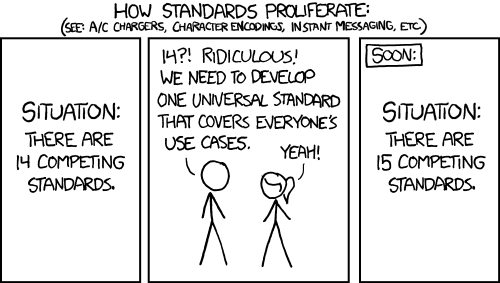
great overview but it is still rough and not complete in some sense. Stuff like the bass trumpet which can be everything from a very narrow alto trumpet to a different shaped valve trombone to a very wide tenor flugelhorn and everything in between are hard to characterise in general. Everything is just an approximation in my opinion and naming is all over the place.
The similarities are certainly obvious when you consider that all these instruments can be played by the same player with no or a very short adaptation phase. Nevertheless, the differences are not small when compared to the (slide) trombone family for example.
The similarities are certainly obvious when you consider that all these instruments can be played by the same player with no or a very short adaptation phase. Nevertheless, the differences are not small when compared to the (slide) trombone family for example.
-
ghmerrill
- Posts: 1836
- Joined: Mon Apr 02, 2018 4:41 pm
Re: New Tenor Tuba Model
It can't be complete in the sense that many people hope for. This is because any system of classification (including taxonomies and ontologies) is developed for a purpose: there are pragmatic goals and interests in creating that system and how it's intended to be used. The system is developed and designed to address or solve a certain set of problems, or to otherwise facilitate a set of goals. Those goals may pertain to analysis of the things in the system, design of those things, expectations of various sorts in terms of where the entities in the system occur, specific and relevant (for one purpose or another) goals that we have in creating that system, etc.Nomsis wrote: Wed Jun 11, 2025 2:30 am great overview but it is still rough and not complete in some sense.
But those goals will conflict -- depending on the purpose for which the system is created. And so each such goal-/pragmatically-based system of classification will appear to be "incomplete". The oldest examples of this are to be found in biology, and various problems in the history of biology pertaining to taxonomies -- but that's only one example. Astro-physicists and others face similar challenges. Remember that a few years ago Pluto got demoted from being a "planet" to being a "dwarf planet".
If you look at the disputes, examples, and counterexamples we've seen here in considering where and how to draw lines between "baritones" and "euphoniums" and "tubas" and other similar instruments, you'll see these conflicts in goals and interests. And keep mind that that "similarity" itself has a number of different senses.
Could you create a "super ontology" that accommodates the variety of (sometimes conflicting) goals, interests, and senses of similarity that we have in talking about these instruments? Yes, but it would be complex and highly "multi-dimensional" in terms of different similarity relations and "inheritance" relations, relations of pitch, historical design, of structural similarity, etc. Not a simple tree or even directed acyclic graph structure. And it certainly won't be developed, or even articulated, in forum like this.
Just look at the history of the Open Biological and Biomedical Ontology Foundry (https://en.wikipedia.org/wiki/OBO_Foundry) and the arguments that have raged within it over the past 20 years -- and consider that many people hotly dispute some of its foundational assumptions. And if you want to see some nasty arguments over how to go about classifying things in "the right way", just follow that history.
Gary Merrill
Getzen 1052FD
DE LB K/K9/110 Lexan
---------------------------
Amati Oval Euph
1924 Buescher 3-valve Eb tuba
1947 Olds "Standard" trombone (Bach 12c)
Getzen 1052FD
DE LB K/K9/110 Lexan
---------------------------
Amati Oval Euph
1924 Buescher 3-valve Eb tuba
1947 Olds "Standard" trombone (Bach 12c)
-
Finetales
- Posts: 1490
- Joined: Fri Mar 23, 2018 12:31 pm
-
ghmerrill
- Posts: 1836
- Joined: Mon Apr 02, 2018 4:41 pm
Re: New Tenor Tuba Model
Yup -- been there in several different ways. ANSI vs. ISO, medical systems of classification (ICD-9, ICD-10, Read Codes, SNOMED, MedDRA, Gene Ontology, Unified Medical Language System, ...), etc.
I once gave a presentation to an international meeting involving phylogenetic classification, the Field Museum Tree of Life project, and other areas of biological and medical classification. In it, I used the example of the Russian Bassoon (neither Russian nor a Bassoon, of course), as an example illustrating challenging issues in developing useful systems of classification. They loved it.
ANSI vs. ISO, medical systems of classification (ICD-9, ICD-10, Read Codes, SNOMED, MedDRA, Gene Ontology, Unified Medical Language System, ...), etc.I once gave a presentation to an international meeting involving phylogenetic classification, the Field Museum Tree of Life project, and other areas of biological and medical classification. In it, I used the example of the Russian Bassoon (neither Russian nor a Bassoon, of course), as an example illustrating challenging issues in developing useful systems of classification. They loved it.
Gary Merrill
Getzen 1052FD
DE LB K/K9/110 Lexan
---------------------------
Amati Oval Euph
1924 Buescher 3-valve Eb tuba
1947 Olds "Standard" trombone (Bach 12c)
Getzen 1052FD
DE LB K/K9/110 Lexan
---------------------------
Amati Oval Euph
1924 Buescher 3-valve Eb tuba
1947 Olds "Standard" trombone (Bach 12c)
-
jonathanharker
- Posts: 142
- Joined: Sat Aug 13, 2022 11:13 pm
Re: New Tenor Tuba Model
More or less spot on except the small French C tuba with 6 dépendant valves is not the same as the bass saxhorn, which is indeed more-or-less interchangeable with the euphonium. The first six-valve instruments appeared in 1892 from Courtois as an evolution from older forms with 3-5 valves, which were in turn intended to replace the ophicleide, then well-established in French orchestras. (Bevan, pp. 342–347)Finetales wrote: Tue Jun 10, 2025 9:56 am A lot of of this naming confusion is either marketing, tradition, or regional differences.
Bevan's The Tuba Family book, apart from covering this whole area in great detail, is also an entertaining read. Not so much cover to cover, but to just dip into; there are amusing quotes and anecdotes sprinkled throughout. In Appendix B there is a glossary of all the names and synonyms for all the valved bugle family instruments that runs to 22 pages (pp. 527–548).
Another great tuba book is Jack Adler-McKean's The Techniques of Tuba Playing. He has also recorded a podcast on the history of the tuba and tuba-adjacent instruments with Louis Kline, The History of the Tuba Podcast.
Last edited by jonathanharker on Fri Jun 13, 2025 3:07 pm, edited 2 times in total.
-
Posaunus
- Posts: 4856
- Joined: Fri Mar 23, 2018 9:54 pm
Re: New Tenor Tuba Model
ghmerrill wrote: Wed Jun 11, 2025 11:47 am Yup -- been there in several different ways.
Gary Merrill
- - - - - - - - - -
1947 Olds "Standard" trombone (Bach 12c)
Speaking of classifications ... what "Standard" does your Olds trombone adhere to?
-
ghmerrill
- Posts: 1836
- Joined: Mon Apr 02, 2018 4:41 pm
Re: New Tenor Tuba Model
Just the standard standard, as far as I can tell.Posaunus wrote: Wed Jun 11, 2025 12:11 pm Speaking of classifications ... what "Standard" does your Olds trombone adhere to?
Gary Merrill
Getzen 1052FD
DE LB K/K9/110 Lexan
---------------------------
Amati Oval Euph
1924 Buescher 3-valve Eb tuba
1947 Olds "Standard" trombone (Bach 12c)
Getzen 1052FD
DE LB K/K9/110 Lexan
---------------------------
Amati Oval Euph
1924 Buescher 3-valve Eb tuba
1947 Olds "Standard" trombone (Bach 12c)
-
jonathanharker
- Posts: 142
- Joined: Sat Aug 13, 2022 11:13 pm
Re: New Tenor Tuba Model
Let me introduce y'all to Hornbostel–Sachs...! For what it's worth, the euphonium is 423.231.2 "Valved bugles with wide bore" while the narrower-but-still-conical bore baritone is 423.232.2 "Valve horns with wider bore"ghmerrill wrote: Wed Jun 11, 2025 7:28 amIt can't be complete in the sense that many people hope for. This is because any system of classification (including taxonomies and ontologies) is developed for a purpose: there are pragmatic goals and interests in creating that system and how it's intended to be used. The system is developed and designed to address or solve a certain set of problems, or to otherwise facilitate a set of goals. Those goals may pertain to analysis of the things in the system, design of those things, expectations of various sorts in terms of where the entities in the system occur, specific and relevant (for one purpose or another) goals that we have in creating that system, etc.Nomsis wrote: Wed Jun 11, 2025 2:30 am great overview but it is still rough and not complete in some sense.
Last edited by jonathanharker on Wed Jun 11, 2025 1:32 pm, edited 1 time in total.
-
ghmerrill
- Posts: 1836
- Joined: Mon Apr 02, 2018 4:41 pm
Re: New Tenor Tuba Model
That's great. Once you've assigned numbers to something, that gives it a high degree of precision and clearer meaning.jonathanharker wrote: Wed Jun 11, 2025 12:25 pm Let me introduce y'all to Hornbostel–Sachs...! For what it's worth, the euphonium is 423.231.2 "Valved bugle with wide bore" while the narrower-but-still-conical bore baritone is 423.232.2 "Valve horns with wider bore"
This is why ICD-9/10 codes are so great in classifying your diseases and medical conditions. Should you need it, the ICD-9 code for ""Death due to a non-military horse-drawn vehicle accident" is E827.x (where the specific value of 'x' indicates the sub-category of the injured party in the accident). Subcategories include those for riders of animals, occupants of the vehicle, etc. Of course the E287 category is a sub-category of the "Other Road Vehicle Accidents" category. The sign of a really carefully developed classification scheme is always occurrences of categories whose names beging with "Other ...".

Alas, ICD-9 isn't as detailed as one might like. So if you're killed by debris from a falling satellite, you would need to use the E916 code for "Struck accidentally by falling object". Care must be taken in assigning codes/categories: if you are in fact killed by an actual spacecraft falling on you, you would need to use a code in the E845 range ("Accident to spacecraft") being careful to distinguish between whether the accident involved "ground crew" or "other person". I leave you to puzzle out why a satellite isn't a "spacecraft" from ICD-9's perspective (perhaps it's stuck in a 1960s view of what a satellite is?).
Of course ICD-9 is now "officially" outdated (though still widely used) in favor of ICD-10. So you would really want to use the ICD-10 classification system (in circumstance where you could), and code the event as V95.40XA ("Unspecified spacecraft accident injuring occupant, initial encounter"). That's unless the spacecraft exploded on impact, in which case you're in a completely different situation.
As you can see, assigning numeric codes to categories is extremely helpful and lends precision to the result. But I'm not sure that the Hornswoggle codes really achieve what is necessary in this regard.
Gary Merrill
Getzen 1052FD
DE LB K/K9/110 Lexan
---------------------------
Amati Oval Euph
1924 Buescher 3-valve Eb tuba
1947 Olds "Standard" trombone (Bach 12c)
Getzen 1052FD
DE LB K/K9/110 Lexan
---------------------------
Amati Oval Euph
1924 Buescher 3-valve Eb tuba
1947 Olds "Standard" trombone (Bach 12c)
-
bbocaner
- Posts: 317
- Joined: Mon Mar 26, 2018 3:14 pm
Re: New Tenor Tuba Model
It doesn't differentiate between, say, a baritone horn and a tenor Wagner tuba. Which I hope we'd all agree are different instruments.jonathanharker wrote: Wed Jun 11, 2025 12:25 pm
Let me introduce y'all to Hornbostel–Sachs...! For what it's worth, the euphonium is 423.231.2 "Valved bugles with wide bore" while the narrower-but-still-conical bore baritone is 423.232.2 "Valve horns with wider bore"
-
jonathanharker
- Posts: 142
- Joined: Sat Aug 13, 2022 11:13 pm
Re: New Tenor Tuba Model
Oh for sure, heh... I posted it in the spirit of how we were discussing how rubbish the standards and controlled vocabularies often are.bbocaner wrote: Thu Jun 12, 2025 2:15 pm It doesn't differentiate between, say, a baritone horn and a tenor Wagner tuba. Which I hope we'd all agree are different instruments.
-
ghmerrill
- Posts: 1836
- Joined: Mon Apr 02, 2018 4:41 pm
Re: New Tenor Tuba Model
I'd go more with "often have been," although I definitely have a certain degree of affinity to your more general view.jonathanharker wrote: Thu Jun 12, 2025 6:19 pm Oh for sure, heh... I posted it in the spirit of how we were discussing how rubbish the standards and controlled vocabularies often are.
A fundamental problem with controlled vocabularies is just that: they're controlled vocabularies -- which means (a) that they are vocabularies (collections of terms), and (b) they are controlled -- which means that people are required to use those terms (and as the controlled vocabulary dictates). This turns out (surprise!) to not be such a good way to represent knowledge or support the making of inferences based on evidence and various complex relations. The justification for it is that it enhances communication (at least in certain ways) because everyone is using the same "language" (set of terms). But in the case of science, and knowledge more generally, this is unacceptably constraining, and can in fact be dangerous (and "wrong" in certain clear senses of this term). Bad scientific and epistemic methodology, at the very least.
The Hornsbostel/Sachs system is anchored firmly in that tradition. So it's a historical curiosity more than anything else -- a footnote in the checkered history of "information science". Maybe even a noble effort -- like the chemists' Phlogiston Theory prior to the 18th century and the work of Priestley and Lavoisier.
 Everybody knew it was fundamentally flawed. They just didn't have anything better.
Last edited by ghmerrill on Fri Jun 13, 2025 7:55 am, edited 3 times in total.
Gary Merrill
Getzen 1052FD
DE LB K/K9/110 Lexan
---------------------------
Amati Oval Euph
1924 Buescher 3-valve Eb tuba
1947 Olds "Standard" trombone (Bach 12c)
Getzen 1052FD
DE LB K/K9/110 Lexan
---------------------------
Amati Oval Euph
1924 Buescher 3-valve Eb tuba
1947 Olds "Standard" trombone (Bach 12c)