
Obviously not a subscriber to some of the darker corners of this site
 .
.At 4:43.
.

What would you say is the first part to fail, and after how long? Thayer valves might have a relatively limited service life, but well-maintained rotors and slides seem like they can keep going more or less indefinitely. Not sure what else there is to wear out on a trombone.Burgerbob wrote: Mon Dec 28, 2020 12:51 pm When you actually play it several hours a day, yes, a horn wears out.


Any moving parts and touch points. Slides wear out, rotors wear out. Tenons and slide receivers too.spencercarran wrote: Mon Dec 28, 2020 1:52 pm Being a bit pedantic here, but (assuming the subtitles are accurate - I don't speak French) he doesn't say the trombones wear out, just that they buy new ones every 10 years or so. Could be lots of reasons for that.
What would you say is the first part to fail, and after how long? Thayer valves might have a relatively limited service life, but well-maintained rotors and slides seem like they can keep going more or less indefinitely. Not sure what else there is to wear out on a trombone.Burgerbob wrote: Mon Dec 28, 2020 12:51 pm When you actually play it several hours a day, yes, a horn wears out.
At the other extreme, I believe Gene Pokorny's tuba is coming up on 90 years old and still in regular use, and tubas are much more mechanically complicated than trombones.
On what sort of timescale though? My instruments are all older than I am, some show signs of abuse from before they got to me, and the only parts that have ever failed to the point of needing replacement were those that suffered severe enough physical trauma to be beyond repair. Regular use (absent dropping the thing down a flight of stairs) would take quite a while to burn through the usable life of a trombone slide. I would expect most well-made, well-maintained brass instruments to outlive the buyer's children.Burgerbob wrote: Mon Dec 28, 2020 2:21 pmAny moving parts and touch points. Slides wear out, rotors wear out. Tenons and slide receivers too.
I think most people underestimate the amount of hand/face time these horns are getting in a professional environment. 5, 6 hours a day, every day, for years. I have older horns too, but none of them were used in that kind of environment. Especially with acidic people wearing away grip areas. I've played a Duo Gravis with a hole in the outer slide from just that.spencercarran wrote: Mon Dec 28, 2020 2:55 pmOn what sort of timescale though? My instruments are all older than I am, some show signs of abuse from before they got to me, and the only parts that have ever failed to the point of needing replacement were those that suffered severe enough physical trauma to be beyond repair. Regular use (absent dropping the thing down a flight of stairs) would take quite a while to burn through the usable life of a trombone slide. I would expect most well-made, well-maintained brass instruments to outlive the buyer's children.Burgerbob wrote: Mon Dec 28, 2020 2:21 pmAny moving parts and touch points. Slides wear out, rotors wear out. Tenons and slide receivers too.

This is actually the closest in the thread to what I think they were getting at in the interview. Obviously, someone that knows French can feel free to say I'm wrong, but the two were talking about how composers oftentimes had a very specific role in mind for the trombone when they would write for it. The trombone is still a relatively new addition to the orchestra, so it makes sense that the trombone sound is not as standardized across the world as say, a violin. Any Stradivari would be a welcome addition to a string section, foreign or domestic, but we really can't say the same about a specific trombone maker. Our ears and tastes are evolving, as are those of conductors, composers, critics, and any other musicians that may be on an audition or tenure panel. It makes sense to me, then, that professionals at the top of our field are experimenting and finding new ideal instruments every decade or so.chromebone wrote: Mon Dec 28, 2020 12:39 pm Nahh, they wear out when (insert name of favorite endorsing player here) switches brands.
Add to that the length of French Grand Opera compared to only playing after intermission on a Masterworks concert too.Burgerbob wrote: Mon Dec 28, 2020 3:15 pmI think most people underestimate the amount of hand/face time these horns are getting in a professional environment. 5, 6 hours a day, every day, for years. I have older horns too, but none of them were used in that kind of environment. Especially with acidic people wearing away grip areas. I've played a Duo Gravis with a hole in the outer slide from just that.spencercarran wrote: Mon Dec 28, 2020 2:55 pm
On what sort of timescale though? My instruments are all older than I am, some show signs of abuse from before they got to me, and the only parts that have ever failed to the point of needing replacement were those that suffered severe enough physical trauma to be beyond repair. Regular use (absent dropping the thing down a flight of stairs) would take quite a while to burn through the usable life of a trombone slide. I would expect most well-made, well-maintained brass instruments to outlive the buyer's children.
I don't think every single horn is going to be clapped out after exactly 10 years in a professional orchestra, but there's not much point in trying to keep something working when you can buy a new one.

tombone21 wrote: Mon Dec 28, 2020 3:45 pm
Add to that the length of French Grand Opera compared to only playing after intermission on a Masterworks concert too.

Ok, that's a definite failure point on trombones. I borrowed an Edwards with a similar hole in the outer slide. It still played fine with a bit of electrical tape, but sure, a professional would want to replace that. For players with less acidic sweat or a $20 hand guard, that issue might not come up for a long time. (And of course if you're willing to play trombone of Theseus, a replacement slide is cheaper than a whole new instrument)Burgerbob wrote: Mon Dec 28, 2020 3:15 pmI think most people underestimate the amount of hand/face time these horns are getting in a professional environment. 5, 6 hours a day, every day, for years. I have older horns too, but none of them were used in that kind of environment. Especially with acidic people wearing away grip areas. I've played a Duo Gravis with a hole in the outer slide from just that.
New trombones cost several grand, right? While that's certainly not prohibitive if it's a piece of required equipment for your job, it's a bit heavier of a lift than buying a new pair of sneakers.Burgerbob wrote: Mon Dec 28, 2020 3:15 pmbut there's not much point in trying to keep something working when you can buy a new one.

Depends on the sneakers!spencercarran wrote: Mon Dec 28, 2020 4:20 pm New trombones cost several grand, right? While that's certainly not prohibitive if it's a piece of required equipment for your job, it's a bit heavier of a lift than buying a new pair of sneakers.
When you're making $150k+ as a tenured performer, $5k every 10 years to make your job and life easier is a tiny investment. Literally the most important "thing" you own at that point.spencercarran wrote: Mon Dec 28, 2020 4:20 pm
New trombones cost several grand, right? While that's certainly not prohibitive if it's a piece of required equipment for your job, it's a bit heavier of a lift than buying a new pair of sneakers.Burgerbob wrote: Mon Dec 28, 2020 3:15 pmbut there's not much point in trying to keep something working when you can buy a new one.
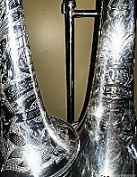
Don't worry, that horn was not played nearly enough... It's safe with me

Buy Snap on Tools equipment and they are guaranteed for life....costs a lot at the start, but you never pay again. As for trombones, unless you have acidic sweat, it's absolute bol-locks. Plenty of 50-60 year old trombones in regular pro use here. I sold a pro used '68 Conn62H to Bob Hughes back in the early '90's and it served him well enough 3 sessions a day, seven days a week....I bet it's still just as usable as when I sold it.Burgerbob wrote: Mon Dec 28, 2020 6:25 pm I'll also point out that many other instruments wear out faster than trombones. Orchestral clarinetists will buy entirely new sets every 5 years because they are literally worn out. That's $3500 a pop at the low end, not to mention reeds and pads.
No one bats an eye at mechanics buying new tools (at huge expense) when they wear out... not sure why it would be any different for musical tools.
Not all horns are that special... in the end, they're just tools. I thought equipment didn't really matter...?FOSSIL wrote: Tue Dec 29, 2020 11:23 am
If you are happy to chuck it after ten years, it can't be that special.
Chris
It doesn't if you already have all the best stuff.....

Agreed. Again... the original York tuba is still going, and will probably see over a century of regular professional use before it's scrapped.FOSSIL wrote: Tue Dec 29, 2020 11:23 amAs for trombones, unless you have acidic sweat, it's absolute bol-locks. Plenty of 50-60 year old trombones in regular pro use here. I sold a pro used '68 Conn62H to Bob Hughes back in the early '90's and it served him well enough 3 sessions a day, seven days a week....I bet it's still just as usable as when I sold it.
Jim, I don't think that anyone here would say that people have to play the same trombone for 30 years...it's just that the opening statement from the Frenchman is an obvious nonsense... I've used professionally a 170 year old trombone that still plays very well....CalgaryTbone wrote: Tue Dec 29, 2020 3:17 pm I think the design folks at Yamaha have built their business practices around a similar concept to this. They are always introducing "new improved" versions of their pro models with new designations. Isn't there something that replaces Xeno now? I've forgotten what was the series that Xeno replaced. A lot of other companies introduce new valves, or signature models. There was a long time when your choices were Conn 8H/88H, Bach 42/42B, King 3B or Conn 6H, Bach 50B or Conn 62H. I know this is an abridged list, and people will want to add to it (fair enough). When the choices were limited and the quality was generally high by the standards of the day, and costs were lower in relation to income levels, people could change horns more frequently. Likewise, today an artist that is associated with a particular company might be getting the new improved versions either for a heavily discounted price or for free. Worth it for the company for advertising sake, but that artist might be changing their instrument often. When it was easy to replace the horn you played, you might be tempted to pick up a new one with no dents and scratches. Now there are "classic" horns that are quite different than the new offerings of the companies like Bach/Conn, and boutique makers like Shires/Edwards/Rath, etc. where the costs have come up and there might be a wait for the exact specs. that you want, making the average player will think twice about changing things out. Of course, forums like this have opened up a way to sell products outside of your local market. Modular horns mean that parts are sometimes replaced rather than the whole instrument.
Anyway, this is a long way of saying that horns can last a lot longer than a decade, but the desire to have something new is real. If a player is in a position to afford it, and they can find the quality they want, then why not. It helps keep the companies that produce those instruments in business. There wouldn't be too many trombone makers if we all were playing classic horns, and the techs would be busy keeping them working.
Jim Scott

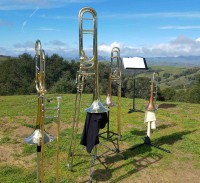




That's until the next Carrington event (huge solar flare that will burn out electronics) in which case your old banger is more likely to still function--although getting petrol might be a challenge. Still, it will be a good time for acoustic music making.
Can't speak for anyone else, but I'm not misinterpreting this - I'm disagreeing. Brass instruments can and do last for an exceptionally long time, even under heavy use.Burgerbob wrote: Tue Dec 29, 2020 5:11 pm Again... everyone choosing to misinterpret "10 years" as instruments 10 years or older, not instruments used hard for 10 years straight.
And I disagree. If a horn has to be rebuilt after 10 years... It's worn out. It's not a bad thing, plenty of people do that. But it's possible and not even that hard.spencercarran wrote: Fri Jan 01, 2021 9:55 amCan't speak for anyone else, but I'm not misinterpreting this - I'm disagreeing. Brass instruments can and do last for an exceptionally long time, even under heavy use.Burgerbob wrote: Tue Dec 29, 2020 5:11 pm Again... everyone choosing to misinterpret "10 years" as instruments 10 years or older, not instruments used hard for 10 years straight.